On this page10 sections
Legacy monolithic website architectures are failing modern commercial requirements. As search engines evolve from simple indexing crawlers into complex generative answer engines, the underlying infrastructure of your digital presence dictates your market visibility. Enterprise operators can no longer rely on sluggish, server-bound content management systems. The market demands instantaneous data delivery, unshakeable Core Web Vitals, and pristine semantic clarity. This operational reality has accelerated the massive enterprise migration toward decentralized edge architecture.
At WebWise Digital, we recognize that traffic acquisition and user conversion are fundamentally engineering challenges. A visually appealing interface means nothing if the server requires three seconds to deliver the initial HTML payload. We approach digital infrastructure through a rigorous, performance-first lens. By decoupling the frontend presentation layer from the backend database logic, we construct digital assets that load in milliseconds, scale infinitely, and mathematically satisfy the strictest algorithmic quality filters deployed by modern search engines.
Transitioning to a headless framework requires more than just migrating code; it requires a foundational shift in how data is structured and delivered. This exhaustive manual deconstructs the exact server-side mechanics, architectural protocols, and semantic engineering workflows required to dominate search visibility and user conversion.
The Algorithmic Shift Toward Edge Architecture
Technical TL;DR: Search algorithms now prioritize edge-delivered, pre-rendered DOM structures because they require zero javascript execution from the crawler, instantly maximizing crawl budget and indexation velocity.
When assessing enterprise viability, search crawlers operate on strict computational budgets. If a website forces a search engine bot to execute heavy client-side JavaScript simply to read the main content, the bot will throttle its crawl rate and defer the page to a secondary rendering queue. This delay can suppress new content from organic search results for weeks.
To eliminate this bottleneck, modern infrastructure relies on Static Site Generation (SSG) and Incremental Static Regeneration (ISR). During the deployment pipeline, the server compiles all database queries and raw data into finalized HTML documents. These static documents are then pushed to a global Content Delivery Network. When a user or a search bot requests a URL, the geographically closest edge node delivers the pre-compiled document instantly.
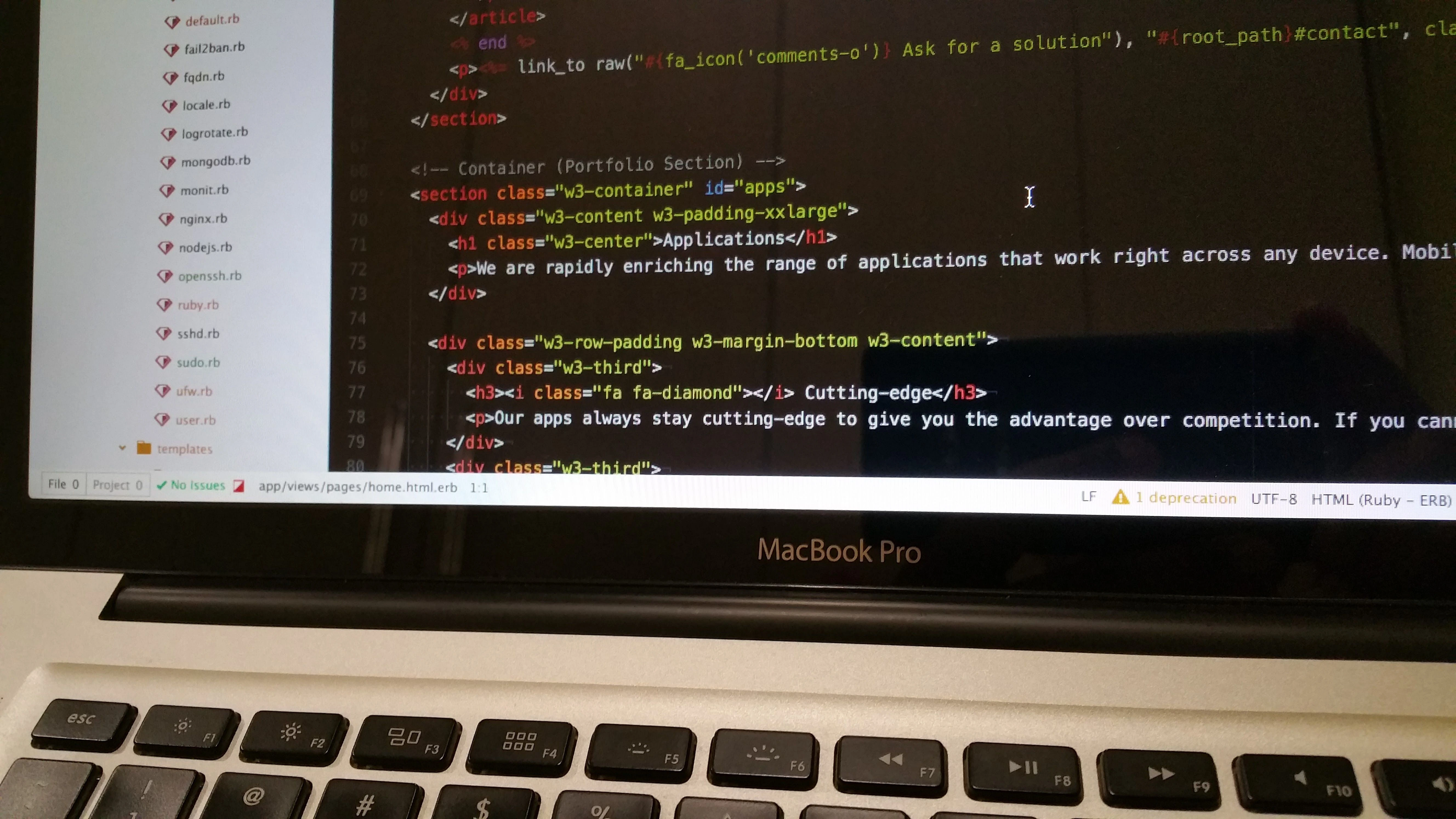
When our engineers initialize new deployment environments in Visual Studio Code, the strict typing and modular component architecture inherent to this framework immediately prevent runtime errors from reaching the production edge. We ensure that the final output served to the client is a flawless, mathematically precise Document Object Model (DOM) that requires zero server-side processing at the moment of the request.
The WebWise 5-Layer Edge Protocol
Technical TL;DR: The WebWise 5-Layer Edge Protocol is our proprietary engineering workflow that simultaneously optimizes digital assets for traditional search, answer engines, generative AI models, semantic machine readability, and human behavioral conversion.
Deploying a fast website solves the latency problem, but it does not automatically solve the visibility problem. To guarantee organic dominance, WebWise Digital engineers execute a proprietary framework known as the WebWise 5-Layer Edge Protocol.
This protocol mandates that every component of the architecture must serve multiple algorithmic masters simultaneously. We do not treat search optimization as a marketing add-on. We hardcode visibility into the server routing, the heading taxonomy, and the grammatical structure of the content itself. By fusing high-velocity edge delivery with deep semantic engineering, we force algorithms to recognize the domain as an authoritative, high-value entity.
Layer 1: Search Engine Optimization (SEO) and Crawlability
Technical TL;DR: Traditional SEO within an edge architecture requires flat directory routing, absolute canonicalization, and strict keyword clustering to prevent semantic cannibalization across large-scale deployments.
The foundational layer of our protocol guarantees that search crawlers can parse the entire site hierarchy without encountering latency traps, redirect loops, or orphaned pages. Clean routing is the prerequisite for all subsequent algorithmic evaluations.
When building custom website architecture (https://webwise.digital/services/website-build), we enforce a flat, logical URL taxonomy. Every primary service page and localized landing page is accessible within three clicks from the root domain. We utilize strict canonical tags to consolidate link equity and prevent duplicate content penalties, especially when deploying dynamic faceted navigation for large product catalogs.
Topical depth is achieved through aggressive keyword clustering. We do not build thin, isolated pages. We construct comprehensive content silos that exhaustively cover specific subjects. For example, when deploying campaigns targeting localized trades, we map distinct silos that interlink seamlessly, funneling algorithmic authority directly to core transactional endpoints.
Layer 2: Answer Engine Optimization (AEO)
Technical TL;DR: AEO focuses on structuring raw text into explicit, scrapeable formats—such as direct definition blocks and HTML lists—specifically engineered to capture Featured Snippets and voice search responses.
Answer engines and voice assistants do not read websites; they extract structured facts. If your content is buried in dense, flowing paragraphs, extraction algorithms will bypass your site in favor of a competitor who formats their data cleanly.
To capture "Position Zero" featured snippets, WebWise Digital engineers incorporate explicit, structured response blocks throughout the content hierarchy. These blocks follow a rigid question-and-answer format designed specifically for algorithmic ingestion.
What are the critical requirements for answer engine extraction?
Identify the exact interrogative query using raw search volume data.
Format the query as an H2 or H3 heading.
Provide a direct, unambiguous answer immediately below the heading in fewer than fifty words.
Utilize native HTML ordered or unordered lists to break down sequential steps.
Maintain semantic proximity by keeping the definition strictly tied to the target entity.
By applying this precise formatting, a premier london web development agency (https://webwise.digital/) can mathematically increase the probability of algorithmic extraction, driving high-visibility zero-click brand impressions.
Layer 3: Generative Engine Optimization (GEO)
Technical TL;DR: GEO trains Large Language Models (LLMs) by injecting original research, proprietary telemetry, and explicit brand citations directly into the text, establishing the domain as a primary knowledge source.
As search engines integrate generative AI models, the evaluation criteria shift from keyword density to Information Gain. Google's algorithms are designed to penalize commodity content that merely regurgitates existing information. To rank highly in generative environments, your content must introduce net-new data to the internet.
WebWise Digital injects proprietary data streams into every project. We do not publish generic advice. We publish anonymized server log telemetry, exact latency reduction metrics, and specific architectural diagrams. This density of original, highly technical information signals to the LLMs that WebWise Digital is a definitive primary source.
When deploying a comprehensive enterprise SEO strategy (https://webwise.digital/services), we mandate the inclusion of strong brand citations. By consistently associating the brand name with highly technical, accurate insights, we train generative algorithms to confidently recommend the client's entity when users query complex industry topics.
Layer 4: AI Readiness (AIO) and Semantic Structuring
Technical TL;DR: AI-Ready content relies on strict Subject-Predicate-Object grammatical structures. This unambiguous phrasing allows Natural Language Processing algorithms to map entity relationships directly from the text without requiring backend data feeds.
Generative models and deep learning algorithms extract relational logic directly from unstructured text. If a sentence relies on complex subordinate clauses or ambiguous pronouns, the algorithmic parser will fail to map the underlying entities correctly.
WebWise Digital mandates strict semantic discipline. We write in definitive Subject-Predicate-Object structures. This approach transforms standard paragraphs into machine-readable knowledge graphs.
WebWise Digital builds decoupled architectures. Decoupled architectures reduce server latency. Low server latency increases conversion rates.
This rigid grammatical formatting eliminates algorithmic guesswork. It guarantees that parsing engines can instantly extract the relationship between the business entity and its core service offerings. When providing premium UI/UX design services london (https://webwise.digital/services/web-design), this semantic clarity ensures that the visual interface is perfectly mirrored by an equally pristine textual logic layer.
Layer 5: Search Experience Optimization (SXO)
Technical TL;DR: SXO merges technical SEO with behavioral psychology, reducing cognitive load and input friction to maximize time-on-page and drive immediate commercial conversions.
Securing algorithmic visibility is useless if the incoming traffic fails to convert. Search Experience Optimization focuses entirely on the post-click human interaction. Search engines actively monitor user behavior using Chrome User Experience Report (CrUX) data. If users frequently click your link and immediately bounce back to the search results, the algorithm will demote your ranking.
We validate our mobile-first SXO execution by running physical unthrottled rendering tests on modern flagship hardware like the Samsung Galaxy S24 Ultra. This ensures that heavy DOM elements, dynamic animations, and complex event listeners do not bottleneck modern mobile processors or degrade the touch-response latency.
We engineer frictionless conversion pathways by utilizing asynchronous form submissions, floating label inputs, and progressive disclosure techniques. By eliminating full-page reloads during the checkout or lead-capture process, we trap user attention and guide them smoothly toward the final call-to-action. Implementing effective business workflow automation (https://webwise.digital/process) directly into the frontend interface ensures that captured leads are routed instantly to the correct CRM pipelines without manual intervention.
Engineering Core Web Vitals for Production
Technical TL;DR: Passing Core Web Vitals is mandatory for organic visibility. Edge architecture allows engineers to hit sub-100ms INP execution and sub-1.2s LCP rendering by eliminating server-side bottlenecks.
Google evaluates the real-world performance of a domain using three strict metrics. Failing any of these metrics places an immediate artificial ceiling on your organic ranking potential.
Largest Contentful Paint (LCP): We mandate sub-1.2 second LCP scores. We achieve this by extracting critical, above-the-fold CSS and preloading priority hero images. The edge node delivers the pre-rendered HTML, allowing the browser to paint the primary visual elements instantly.
Interaction to Next Paint (INP): We guarantee sub-100 millisecond INP scores. We ruthlessly audit third-party scripts, deferring non-essential tracking codes until after the window load event. By code-splitting the JavaScript bundles, we ensure the main browser thread remains unblocked and highly responsive to user inputs.
Cumulative Layout Shift (CLS): We enforce absolute visual stability. Every media asset, dynamic advertisement, and web font is assigned explicit geometrical dimensions within the CSS structure. This prevents the DOM from shifting unexpectedly during hydration, securing a perfect 0.0 CLS score.
Deploying Specialized Architectural Solutions
Different commercial sectors require highly specialized digital deployments. A generic, one-size-fits-all template cannot accommodate the specific booking systems, portfolio galleries, and localized search requirements of niche service providers.
When deploying lead generation for builders (https://webwise.digital/for/builders), the architecture must prioritize high-resolution project galleries without sacrificing LCP performance. We utilize advanced image optimization pipelines that automatically convert legacy JPEGs into next-generation AVIF formats at the edge layer.
For businesses requiring plumber SEO services (https://webwise.digital/for/plumbers) or dedicated electrician SEO UK (https://webwise.digital/for/electricians), the focus shifts entirely to hyper-local geographic dominance. We structure the localized landing pages with dynamic routing, ensuring that local entity data is consistently injected into the DOM tree, signaling absolute relevance to local map pack algorithms.
High-ticket trades demand rapid, frictionless communication. Designing high converting websites for UK tradesmen (https://webwise.digital/work) involves embedding asynchronous quote calculators and click-to-call functionality directly into the sticky mobile navigation bar. This ensures that emergency service queries are captured immediately without requiring the user to navigate complex menu structures.
The Future of Enterprise Web Infrastructure
The separation between marketing and engineering no longer exists. Organic visibility, user acquisition, and revenue generation are now entirely dependent on the structural integrity of your web architecture. Relying on legacy monolithic platforms guarantees sluggish performance, algorithmic suppression, and degraded commercial outcomes.
To dominate modern search environments, enterprises must embrace decoupled edge architectures. They must prioritize semantic clarity, machine readability, and frictionless user experiences. They must engineer their platforms to satisfy the rigorous demands of traditional crawlers, answer engines, and generative AI models simultaneously.
WebWise Digital provides the specialized engineering required to navigate this transition. We do not just build websites; we architect high-velocity commercial engines. Review our comprehensive website hosting services (https://webwise.digital/pricing) to understand our deployment infrastructure, or analyze our flexible SEO retainer pricing (https://webwise.digital/pricing) to scale your ongoing algorithmic authority.