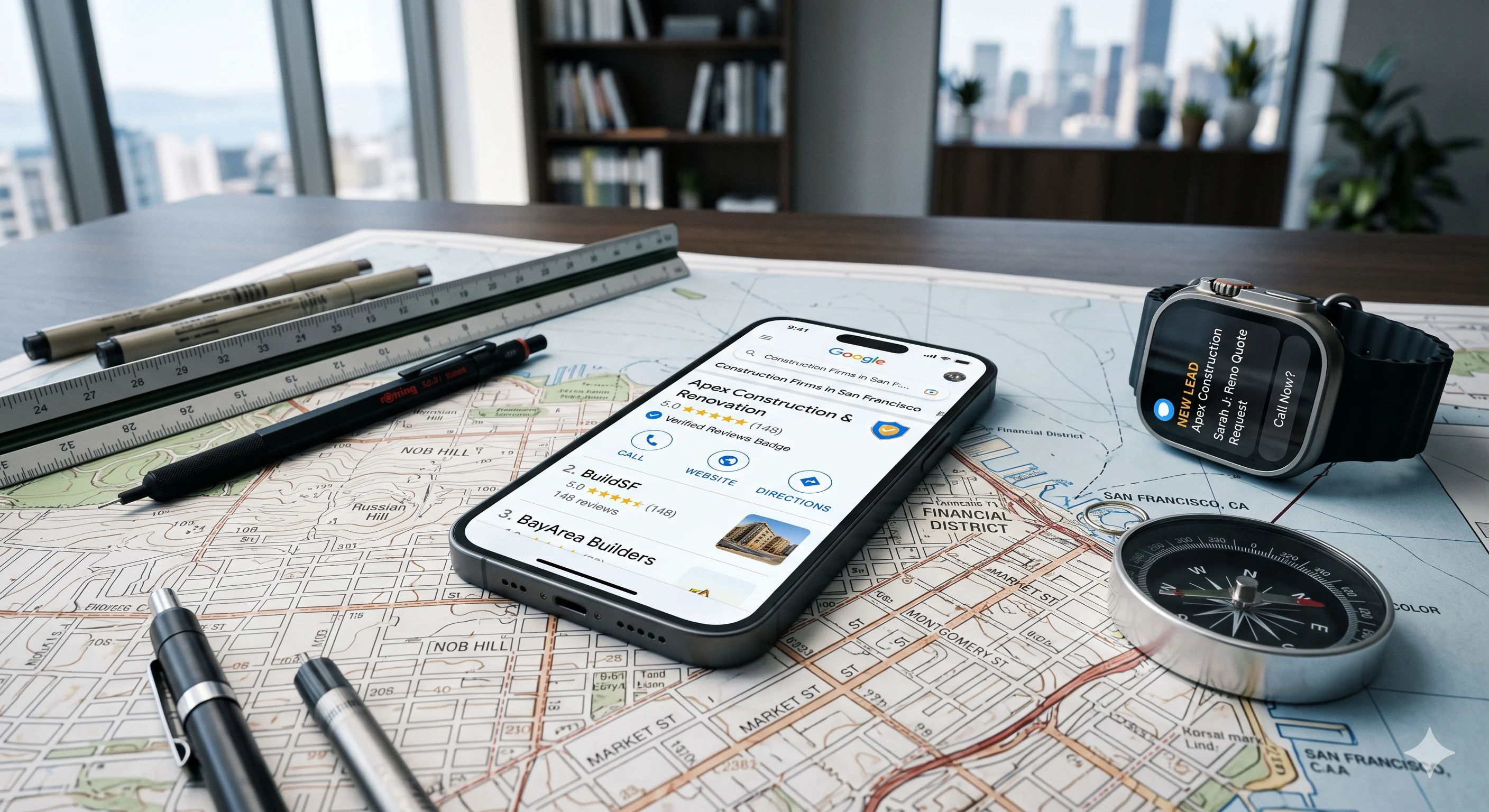
The landscape of local search engine optimization for trades has fundamentally shifted. Following the March 2026 Core Update, AI Overviews have been pushed deeper into local search results, and currently, 46% of all Google searches carry localized intent. For contractors, relying on a basic, unoptimized business listing is no longer a viable strategy; it is a rapid path to digital obsolescence.
To dominate the Map Pack, you must move beyond rudimentary directory submissions. You must engage in structural proximity engineering. Google evaluates every local business against three unyielding pillars: Relevance, Distance, and Prominence. It then layers complex behavioral signals, entity recognition protocols, and AI triangulation on top to dictate the final search grid.
This is the definitive, data-backed blueprint for engineering a localized digital footprint that forces search algorithms to prioritize your trade business across any region.
The 2026 Algorithmic Weighting System
Understanding how the algorithm distributes its ranking weight allows you to allocate your technical resources efficiently. In 2026, the local algorithm's scoring breaks down into six primary signal groups:
GBP Signals (32%): Your Google Business Profile is the foundational layer, driven by primary category selection, exact business name matching, and overall profile completeness.
On-Page Signals (19%): The structural integrity, mobile performance, location pages, and schema markup of your website.
Review Signals (16%): The velocity, diversity, star rating, and keyword density of your customer feedback.
Link Signals (15%): Hyper-local backlinks from regional news, Chambers of Commerce, or industry-specific authorities.
Behavioral Signals (8%): Click-through rates, mobile clicks-to-call, and physical direction requests.
Citation Signals (7%): Precise Name, Address, and Phone (NAP) consistency across external data aggregators.
Distance, Proximity, and the Openness Factor
Distance drives approximately 55% of all Map Pack ranking decisions. The algorithm calculates proximity based on the user's device GPS, their IP address, or the specific location modifier used in their query.
However, proximity is heavily gated by a critical supporting metric: the openness signal. Business operating hours are a massive behavioral filter in 2026. If an emergency plumbing query or a weekend landscaping search occurs when your profile is marked as closed, your visibility is immediately suppressed in favor of competitors who are actively operating.
To combat geographic limitations in highly competitive zones, you must establish an overwhelming Prominence score. A business with robust review volume, local news mentions, and strong Knowledge Graph entity recognition will actively outrank a closer competitor with inferior trust signals.
Architecting the Trust Threshold: Review Velocity
A sudden, unnatural spike in reviews followed by months of silence is easily flagged by modern AI-driven policy enforcement systems, resulting in immediate profile suppression. The algorithm rewards consistent review velocity over sheer volume. Securing a steady cadence of two to three reviews per week builds a highly resilient algorithmic trust signal.
Furthermore, research indicates a specific algorithmic trust threshold is crossed when a business moves from 9 to 10 verified reviews. Hitting this minimum viable trust level is your first mandatory objective.
In the current environment, the actual text within the reviews carries immense weight. Reviews that explicitly mention specific services and locations act as powerful semantic validators. Generating automated pipelines that encourage clients to use specific phrasing in their feedback is a critical operational advantage.
Entity Validation and Semantic On-Page Engineering
Your website serves as the ultimate validation engine for your GBP listing. If the data on your site conflicts with your profile, the algorithm loses confidence, and your rankings drop.
Hyper-Local Silos: If you are scaling a masonry and landscaping contractor in the South East, targeting specific queries like "brickwork Kent" or "landscaping Kent," a single centralized service page will fail. You must construct isolated, hyper-local service pages that target specific municipalities with unique, technically accurate content.
Strict JSON-LD Injection: Your LocalBusiness schema must flawlessly mirror your GBP data. The business name in your JSON-LD must be identical to your profile, and the address format must match character for character, including suite numbers. We also recommend hardcoding geographic coordinates directly into the metadata to feed the algorithm absolute positional certainty.
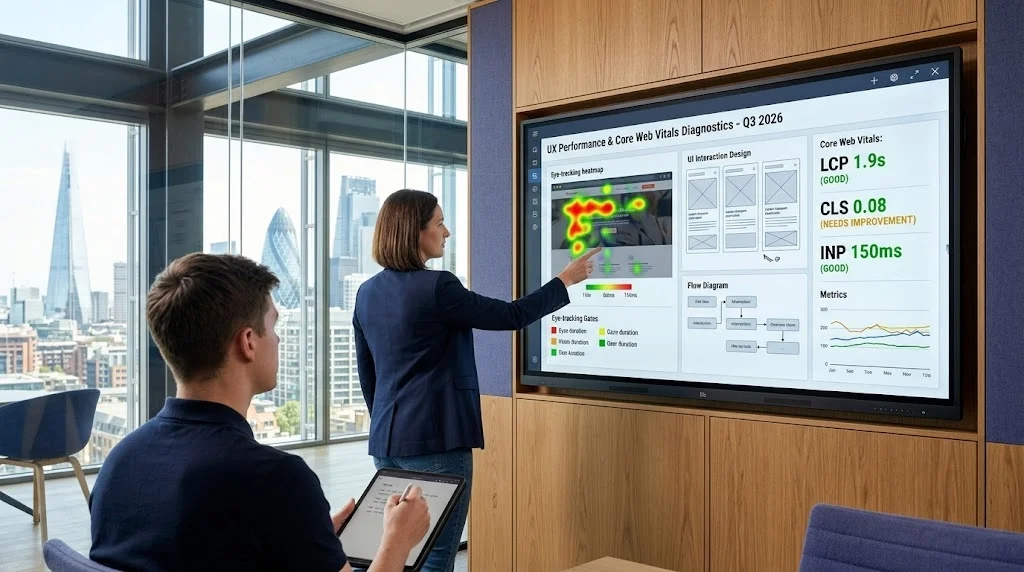
Zero-Latency Mobile Rendering: Currently, 57% of local searches happen on mobile devices. If your site's codebase is bloated and causes the viewport to stutter on high-end hardware like a Samsung S24 Ultra, your Interaction to Next Paint (INP) and Largest Contentful Paint (LCP) scores will fail. An LCP over 4.0 seconds is considered poor and will result in ranking penalties.
Dominating the Fractured Search Ecosystem
Local search is no longer confined to a single platform; it has fractured across Google Maps, Apple Business Connect, and various AI answer engines. To ensure a Large Language Model or an AI Overview recommends your trade business, you must establish Cross-Surface Entity Coherence. This means your NAP data, service categories, and brand signals must remain completely synchronized across every digital touchpoint.
Engineered precision is the only way to secure high-value local contracts in a mathematically rigid search environment. If you are prepared to deploy a technically flawless localized architecture, explore the comprehensive search optimization frameworks we construct for our clients, or contact our technical team to initiate your domain analysis.