Written by the conversion strategy team at WebWise — a web design agency for small business UK that has designed and built tradesman websites UK for over a decade. We have shipped high converting websites for UK tradesmen across London, Birmingham, Manchester, and Glasgow, from one-man renovation specialists to multi-van construction firms. Every tactic in this playbook has been tested on live builder sites. No theory. Just what moves the needle.
Table of Contents
Why Builders Need More Than a Brochure Website
The Builder's Digital Problem: Traffic Without Quotes
What Lead Generation Web Design Actually Means
The Anatomy of a High-Converting Builder Website
Automated Quote Funnels: From Click to Calendar
Speed and Mobile: The 80% Rule for Builder Sites
Local SEO for Builders: Ranking Where the Jobs Are
Google Business Profile: Your Free Lead Machine
Trust Signals That Convert Browsers Into Bookers
Content Strategy for Builder Lead Gen
Tracking and Measuring Lead Quality
The 30-Day Builder Website Launch Plan
Conclusion
1. Why Builders Need More Than a Brochure Website
If you are a builder in the UK, there is a good chance your current website does exactly three things: it shows your company name, it lists your services, and it has a contact form that nobody uses. It is a digital business card. And in 2026, a business card is not enough.
Homeowners do not choose builders the way they did ten years ago. They do not flick through the Yellow Pages or rely solely on neighbour recommendations. They search on Google. They compare three websites on their phone. They read reviews, check photos, and form an opinion within seconds. And if your site does not immediately answer their questions, build their trust, and make it effortless to request a quote, they are gone. On to the next builder. The one whose website actually works.
This is the difference between a brochure site and a lead generation web design for builders. A brochure site tells people you exist. A lead generation site turns strangers into enquiries while you sleep. It pre-qualifies prospects, captures their details, books them into your calendar, and feeds your pipeline without you lifting a finger.
The builders winning in 2026 are not necessarily the ones with the biggest vans or the flashiest logos. They are the ones with websites that function as sales engines. And this playbook is exactly how you build one.
2. The Builder's Digital Problem: Traffic Without Quotes
Most builders who come to us have the same complaint: "I get traffic, but I am not getting quotes." They have a website. They might even rank on page two or three for "builder near me." Visitors arrive. And then they leave. No phone call. No form submission. Nothing.
This is not a traffic problem. It is a conversion problem. And conversion is where builder website development becomes a genuine business discipline.
Why Visitors Leave Without Enquiring
They cannot find what they need. A homeowner with a £40,000 extension budget lands on your homepage and sees "Welcome to Smith & Sons Builders." They scroll. They see "About Us." They see "Our Services." They still do not know if you do extensions in their area, how much it costs, or how to get a quote. So they bounce.
They do not trust you yet. No photos of real jobs. No reviews. No qualifications. No insurance details. Just stock images of smiling construction workers and generic promises about "quality craftsmanship." In an industry plagued by cowboys, trust is currency. And a thin website spends none of it.
It is too hard to contact you. A contact form buried three clicks deep. No phone number on mobile. No WhatsApp. No live chat. A homeowner who has just discovered a crack in their wall at 9 PM wants to send a message now. If they cannot, they will message someone who can.
The site is slow or broken. It takes four seconds to load on 4G. The gallery images do not display. The tap-to-call button does not work. On a phone — which is where 80% of your visitors are — these failures are fatal.
Fixing these issues is not about design aesthetics. It is about understanding the psychology of a homeowner who needs a builder, removing every barrier between their need and your quote form, and engineering a site that converts at every touchpoint.
3. What Lead Generation Web Design Actually Means
Lead generation web design for builders is not a buzzword. It is a specific approach to website architecture, content, and functionality that prioritises one metric above all others: qualified enquiries.
The Five Principles of Builder Lead Gen Design
Principle One: Every Page Is a Landing Page
In traditional web design, the homepage is the front door and every other page is a room off the hallway. In lead generation design, every page is a potential entry point and every page must convert. Your "Kitchen Extensions" page. Your "Loft Conversions" page. Your "Areas We Cover" page. Each one needs a clear value proposition, social proof, and a prominent call to action.
Principle Two: Friction Kills Conversions
Every field you add to a form, every click you force a user to make, every page they must load before they can contact you — these are friction points. Each one drops your conversion rate. A lead generation site ruthlessly eliminates friction. One-tap calling. Pre-filled quote forms. WhatsApp integration. The path from "I am interested" to "Here are my details" should be three seconds, not three minutes.
Principle Three: Trust Before Transaction
Nobody books a builder without trust. A lead generation site builds trust before asking for anything. Reviews. Photos. Qualifications. Insurance details. Guarantees. Case studies with real names, real addresses, and real budgets. The more trust you build, the less resistance you face when you ask for the enquiry.
Principle Four: Mobile Is the Primary Experience
Your site is not viewed on a desktop in a quiet office. It is viewed on a cracked iPhone in a kitchen, on a building site, in a car outside a potential job. Fast loading website design for contractors is not a luxury. It is the baseline. If your site is not built mobile-first, you are designing for a visitor who does not exist.
Principle Five: Data Drives Decisions
A lead generation site is never finished. It is tested, measured, and optimised. Which page gets the most traffic? Which form converts best? Which headline generates the most calls? Without tracking, you are guessing. With tracking, you are improving.
4. The Anatomy of a High-Converting Builder Website
Through years of building high converting websites for UK tradesmen, we have identified the pages that every builder needs — and the elements that each page must contain.
The Homepage: Your Elevator Pitch
A builder's homepage has three seconds to answer four questions:
What do you do?
Where do you do it?
Why should I trust you?
How do I get a quote?
Essential elements:
Headline with primary keyword and location: "Kitchen Extensions & Loft Conversions in Manchester — Fixed-Price Quotes"
Subheadline with trust signal: "Gas Safe Registered · £5M Insurance · 150+ Verified Reviews"
Click-to-call phone number, visible without scrolling
Primary call-to-action button: "Get a Free Quote"
Social proof strip: logos, review stars, recent project photos
Service grid: clickable cards for each major service
Service Pages: One Page, One Purpose
Do not lump all your services onto one generic page. Create dedicated pages for each service you want to rank for: Kitchen Extensions, Loft Conversions, Garage Conversions, New Builds, Renovations, Refurbishments.
Each service page should include:
A compelling headline with the service and location
A detailed description of what the service includes
Pricing guidance or a "from" price (even a range builds trust)
A project gallery with before and after shots
Customer testimonials specific to that service
A prominent quote request form or click-to-call button
Internal links to related services and area pages
Area Pages: Capture Local Search
If you serve multiple towns or boroughs, create a dedicated page for each. "Builder in Salford," "Builder in Stockport," "Builder in Bolton." These pages should not be duplicates with the town name swapped out. They should include local-specific content: local building regulations, familiar landmarks, customer stories from that area, and photos of jobs completed there.
This is foundational to local SEO for contractors. Without area pages, you are invisible to homeowners searching in specific locations.
The About Page: Build the Human Connection
Homeowners buy from people, not companies. Your About page should feature:
Photos of you and your team (not stock photos)
Your story — how you started, why you do this, what you stand for
Qualifications and accreditations (FMB, TrustMark, NVQ, CSCS)
Insurance details
Your process — what happens from first call to final invoice
The Reviews Page: Social Proof at Scale
Embed your live Google reviews. Add video testimonials if you have them. Include photos of the customers and their completed projects. A review from "John M., Didsbury" with a photo of his new kitchen is infinitely more powerful than a generic five-star rating.
The Contact Page: Every Option, Zero Friction
Phone (click-to-call). WhatsApp (click-to-chat). Email. Quote form. Address with embedded map. Opening hours. Response time promise ("We reply to all enquiries within 2 hours"). The more ways a customer can reach you, the more enquiries you capture.
5. Automated Quote Funnels: From Click to Calendar
The most powerful feature of a modern builder website is not the design. It is the automated quote funnel for field services. A system that captures a visitor's interest, qualifies their project, and books them into your workflow without you answering a single phone call.
How a Builder Quote Funnel Works
Step One: The Trigger
A homeowner clicks "Get a Free Quote" on your kitchen extension page.
Step Two: Qualification
Instead of a generic contact form, they answer three to five quick questions:
What type of property? (Terraced, semi-detached, detached)
What is the approximate budget? (£10k–£20k, £20k–£40k, £40k+)
What is the timeframe? (ASAP, 3–6 months, 6–12 months)
Upload photos of the current space (optional but powerful)
These questions serve two purposes. They give you the information you need to prepare a meaningful quote. And they filter out time-wasters. A homeowner who cannot answer basic questions is not ready to buy.
Step Three: The Offer
Based on their answers, the funnel presents a next step. For high-budget, urgent projects: "Book a Site Visit." For lower-budget, longer-timeframe projects: "Download Our Pricing Guide" or "Join Our Waiting List." For unclear projects: "We Will Call You Within 2 Hours."
Step Four: The Integration
The lead is automatically pushed to your CRM, your job management software, or your calendar. You get a notification. The customer gets a confirmation email with your brochure, your process, and what to expect next. No manual data entry. No lost sticky notes.
Tools That Make This Possible
Typeform or Jotform for beautiful, conversational forms
Zapier to connect forms to your CRM, email, and calendar
Calendly or Microsoft Bookings for self-service site visit scheduling
HubSpot CRM (free tier) for lead tracking and follow-up automation
WhatsApp Business API for automated confirmation messages
A contractor web design specialist who understands builder workflows can wire all of this together so it feels seamless to the customer and effortless to you.
6. Speed and Mobile: The 80% Rule for Builder Sites
We have said it before, but it bears repeating: over 80% of your website visitors are on mobile devices. For builders, this number is often higher because homeowners search in moments of crisis — a leak, a crack, a collapsed fence — when they are not near a desktop.
The Mobile-First Checklist for Builders
Tap-to-Call Dominance: Your phone number should be visible and tappable on every single page. In the header. In the footer. In the middle of service pages. Next to every call-to-action. A homeowner with a burst pipe does not want to fill out a form. They want to tap and call.
Thumb-Friendly Buttons: Every button — "Get a Quote," "View Gallery," "Call Now" — should be at least 48 pixels tall and wide enough to tap without precision. A missed tap is a lost lead.
Fast Loading: Your site should load in under two seconds on a 4G connection. Builders' sites are particularly vulnerable to bloat because of heavy project galleries. Optimise every image. Use WebP format. Implement lazy loading. Compress without visible quality loss.
Sticky Header: As the user scrolls, your phone number and "Get a Quote" button should remain visible. Do not make them scroll back to the top to contact you.
Simplified Forms: On mobile, every field is a burden. Name, phone, email, project type, postcode. That is five fields. Anything beyond that and your conversion rate drops. If you need more detail, ask it in the follow-up call, not the initial form.
Core Web Vitals for Builders
Google measures three Core Web Vitals, and they directly impact your rankings:
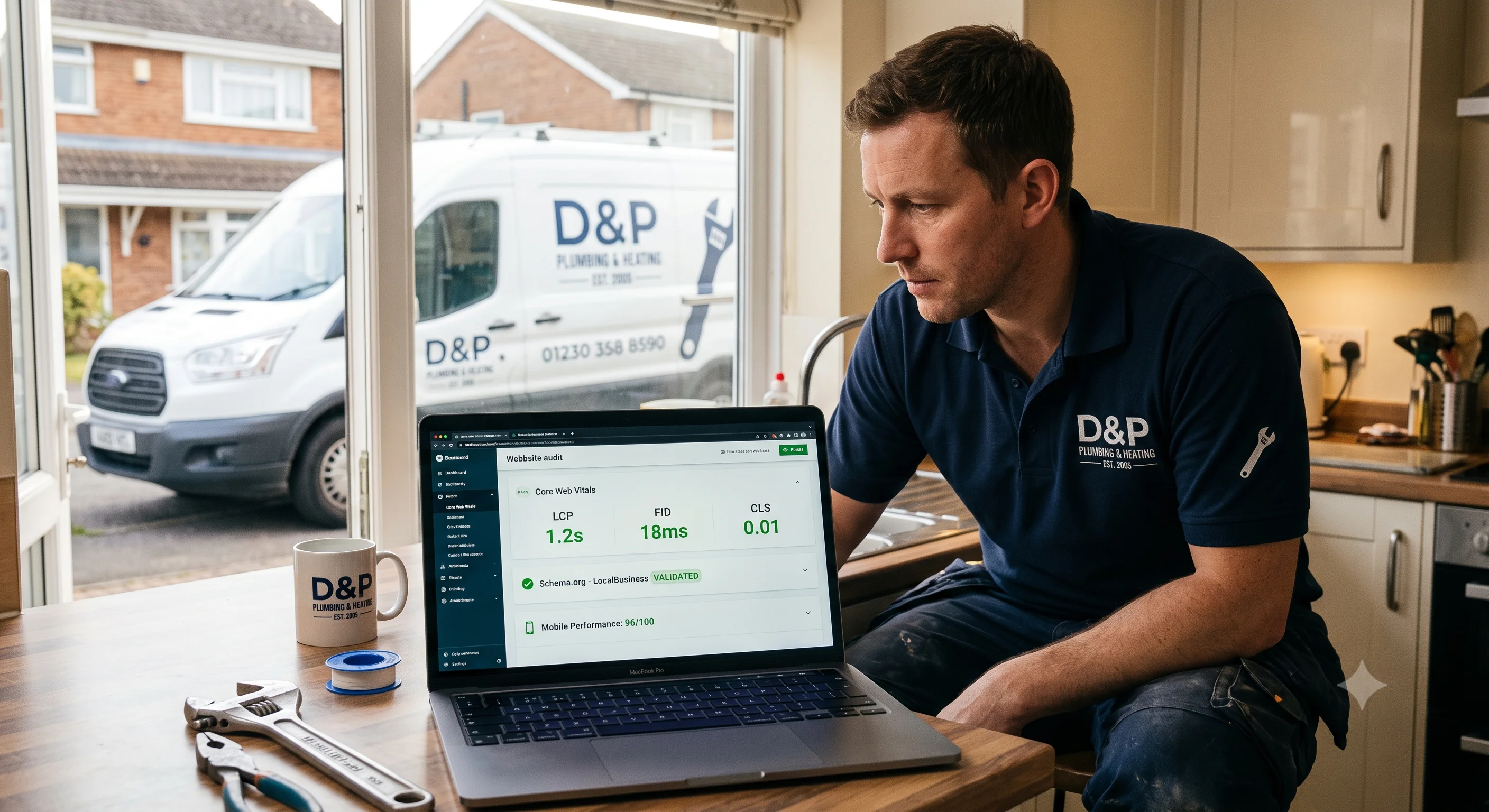
Largest Contentful Paint (LCP): How fast does the main content appear? Target under 2.5 seconds. For builders, the hero image is usually the culprit. Compress it. Preload it. Use a CDN.
Interaction to Next Paint (INP): How quickly does the page respond to taps? Target under 200 milliseconds. Heavy page builders and excessive JavaScript kill INP.
Cumulative Layout Shift (CLS): Does the page jump around as it loads? Target under 0.1. This happens when images or ads load late and push content down. Specify image dimensions in your code to prevent it.
Achieving fast loading website design for contractors is not magic. It is discipline. Compress images, clean code, defer non-essential scripts, and use quality hosting.
7. Local SEO for Builders: Ranking Where the Jobs Are
A builder in Leeds does not need to rank in London. A builder in Bristol does not need to rank in Birmingham. Local SEO is not about national visibility. It is about dominating the specific geographic areas where you actually work.
The Local SEO Foundation
Google Business Profile: This is the single most important digital asset for any local builder. We will cover this in detail in the next section.
NAP Consistency: Your Name, Address, and Phone number must be identical across your website, your Google Business Profile, and every directory listing. "Smith & Sons Builders Ltd" on your site and "Smith and Sons" on Yell confuses Google. Consistency matters.
Service Area Pages: As mentioned earlier, create dedicated pages for every town, borough, or postcode area you serve. These pages should include local landmarks, local customer testimonials, and area-specific project photos.
Local Citations: Get listed in UK trade directories: Yell, Thomson Local, Checkatrade, Rated People, Bark, TrustATrader, MyBuilder. Each citation reinforces your local relevance.
Local Link Building: Sponsor a local football team. Partner with a local estate agent. Get featured in local news. These local backlinks signal to Google that you are a genuine part of the community.
How to Rank Higher on Google for Local Trades
The question every builder asks: how to rank higher on Google for local trades? The answer is consistency across five pillars:
A technically sound, fast, mobile-friendly website
Optimised Google Business Profile with regular posts and photos
Genuine customer reviews, steadily accumulated
Local citations and backlinks
Area-specific content that demonstrates local expertise
None of these are quick fixes. But done together, over six months, they move the needle dramatically.
8. Google Business Profile: Your Free Lead Machine
Your Google Business Profile (GBP) is the most overlooked lead generation tool in the builder's arsenal. It is free. It appears above organic search results. And most of your competitors are using it badly.
The GBP Optimisation Checklist for Builders
Business Name: Use your actual trading name. Do not stuff keywords. "Smith & Sons Builders" is fine. "Smith & Sons Builders Loft Extensions Manchester" is not.
Categories: Choose your primary category carefully. "Builder" or "Construction Company" is the primary. Add secondary categories: "Renovation Company," "Kitchen Remodeler," "Bathroom Remodeler," "Extension Builder."
Description: Use all 750 characters. Describe your services, your areas, your qualifications, and what makes you different. Include your FMB or TrustMark accreditation.
Services: List every service you offer with descriptions. Do not just list "Building." Break it down: "Kitchen Extensions," "Loft Conversions," "Garage Conversions," "New Builds," "Renovations."
Photos: Upload high-quality photos weekly. Your team. Your van. Your sites. Before and after shots. Photos of you with customers. Active GBPs rank better than dormant ones.
Posts: Use GBP posts to share updates. "Just completed a £45,000 kitchen extension in Didsbury — swipe for before and after shots." These posts signal activity and trust.
Reviews: Actively request reviews from every satisfied customer. Send them a direct link to your review form immediately after completion. Respond to every review — positive and negative — professionally and promptly.
Q&A: Pre-populate common questions. "Do you offer free quotes?" "Are you insured?" "What areas do you cover?" This helps potential customers and gives Google more context.
Google business profile optimization for trades is not a one-time task. It is an ongoing commitment. The builders who post weekly, upload photos, and gather reviews consistently are the ones who own the Map Pack.
9. Trust Signals That Convert Browsers Into Bookers
In an industry plagued by cowboy builders and unfinished jobs, trust is your most valuable currency. Your website must communicate trust before the visitor ever speaks to you.
The Essential Trust Signals
Accreditations and Memberships: Display your FMB, TrustMark, NHBC, or CSCS logos prominently. These are not decorations. They are proof that you meet industry standards.
Insurance Details: State your public liability insurance value clearly. "£5 Million Public Liability Insurance" is a powerful trust signal.
Guarantees: Offer a workmanship guarantee. "10-Year Structural Guarantee on All Extensions." This removes risk from the customer's decision.
Project Galleries: Before and after photos are the most persuasive content on any builder's website. Not one or two. Dozens. Organised by service type. With captions that describe the project scope, the budget range, and the timeline.
Video Testimonials: A 60-second video of a happy customer showing their new kitchen and talking about the experience is worth more than a hundred written testimonials.
Transparent Pricing: Even a rough guide builds trust. "Kitchen extensions typically range from £25,000 to £45,000 depending on size and specification." Customers who know what to expect are more likely to enquire.
Process Explanation: Explain exactly what happens from first contact to completion. "Step 1: Free site survey and quote. Step 2: Detailed plans and planning permission if required. Step 3: Fixed-price contract. Step 4: Build. Step 5: Snagging and handover." Clarity builds confidence.
Contactability: Multiple contact methods. Fast response promises. Real addresses (not PO boxes). These all signal that you are a real, accountable business.
10. Content Strategy for Builder Lead Gen
Content is where most builder websites fall flat. They have service pages and a contact form. That is it. A proper content strategy builds authority, captures long-tail search traffic, and nurtures visitors who are not yet ready to enquire.
The Content Pillars for Builders
Project Case Studies: Detailed write-ups of completed jobs. "How We Built a £40,000 Kitchen Extension in Chorlton in Eight Weeks." Include the brief, the challenges, the solutions, the materials, the budget, the timeline, and the customer testimonial. These rank for long-tail searches and convert visitors who want proof of capability.
Service Guides: Comprehensive guides to each service. "The Complete Guide to Loft Conversions in Manchester." Cover planning permission, building regulations, typical costs, timelines, and common pitfalls.
Area Guides: Content specific to locations you serve. "Building Regulations for Extensions in Salford." "Typical Victorian Terrace Renovation Challenges in Stockport." These demonstrate local expertise and capture hyper-local searches.
FAQ Content: Answer every question you have ever been asked. "How long does a kitchen extension take?" "Do I need planning permission?" "What is the difference between an architect and a structural engineer?" FAQ schema can help these appear directly in search results.
Process Content: Explain how you work. "What Happens During a Site Survey?" "How We Price a New Build Project." This demystifies your service and reduces friction.
The EEAT Content Framework
Every piece of content should demonstrate:
Experience: "In our fifteen years building extensions across Greater Manchester, we have encountered every foundation issue imaginable..."
Expertise: Clear, accurate explanations of building techniques, regulations, and materials.
Authoritativeness: Cite regulations, link to official sources (Planning Portal, Building Regulations), and reference industry standards.
Trustworthiness: Be honest about limitations, timelines, and costs. Do not promise what you cannot deliver.
11. Tracking and Measuring Lead Quality
A lead generation site without tracking is a car without a dashboard. You might be moving, but you have no idea how fast, in what direction, or whether you are about to run out of fuel.
The Metrics That Matter for Builders
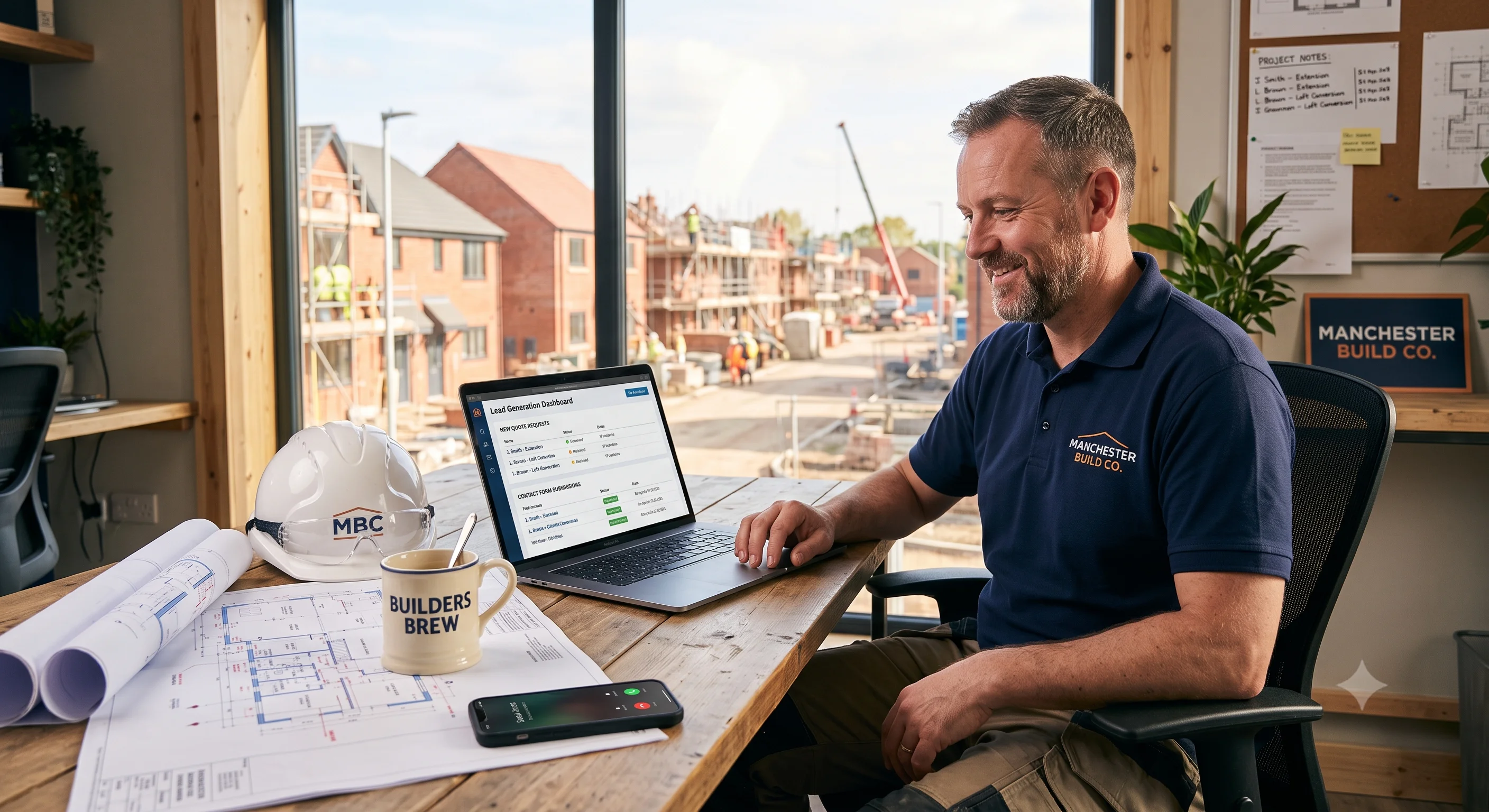
Total Enquiries: Phone calls, form submissions, WhatsApp messages, and live chat conversations. Track them all.
Enquiry Source: Which page generated the lead? Your "Kitchen Extensions" page? Your "Builder in Salford" page? Your Google Business Profile? Knowing this tells you where to invest.
Conversion Rate: What percentage of visitors enquire? A good builder website converts 3–5% of visitors. A great one converts 5–10%. If your rate is under 2%, something is broken.
Cost Per Lead: If you are running paid ads or paying for SEO, divide your monthly spend by your monthly enquiries. This tells you the true cost of each lead.
Lead Quality: Not all enquiries are equal. A £60,000 new build enquiry is worth more than a £500 repair request. Track the value of jobs that originate from your website.
Phone Call Tracking: Use a unique phone number on your website (via CallRail, ResponseTap, or similar) so you know exactly how many calls come from the site versus other sources.
Form Abandonment: How many people start your quote form but do not finish? If the number is high, your form is too long or too complex.
Tools We Recommend
Google Analytics 4: Track traffic, behaviour, and conversions.
Google Search Console: See what queries you rank for and your click-through rates.
Google Business Profile Insights: Track how customers find you and what actions they take.
Hotjar or Microsoft Clarity: Heatmaps and session recordings to see how visitors actually use your site.
Call Tracking Software: Attribute phone calls to specific pages and campaigns.
12. The 30-Day Builder Website Launch Plan
If you are ready to turn your website into a lead generation machine, here is your 30-day action plan.
Days 1–7: Foundation
[ ] Audit your existing site for mobile performance and speed
[ ] Claim and fully optimise your Google Business Profile
[ ] Ensure NAP consistency across all listings
[ ] Set up Google Analytics 4 and Google Search Console
[ ] Define your primary services and target areas
Days 8–14: Content and Structure
[ ] Create dedicated service pages for each primary offering
[ ] Build area pages for each town or borough you serve
[ ] Write or commission professional copy for all key pages
[ ] Gather and optimise project photos (before, during, after)
[ ] Collect and embed customer testimonials and reviews
Days 15–21: Conversion Optimisation
[ ] Implement click-to-call on every page
[ ] Build a quote request funnel with qualification questions
[ ] Add WhatsApp chat integration
[ ] Install live chat if feasible
[ ] Create sticky headers with prominent CTAs on mobile
Days 22–28: Technical Polish
[ ] Compress and optimise all images
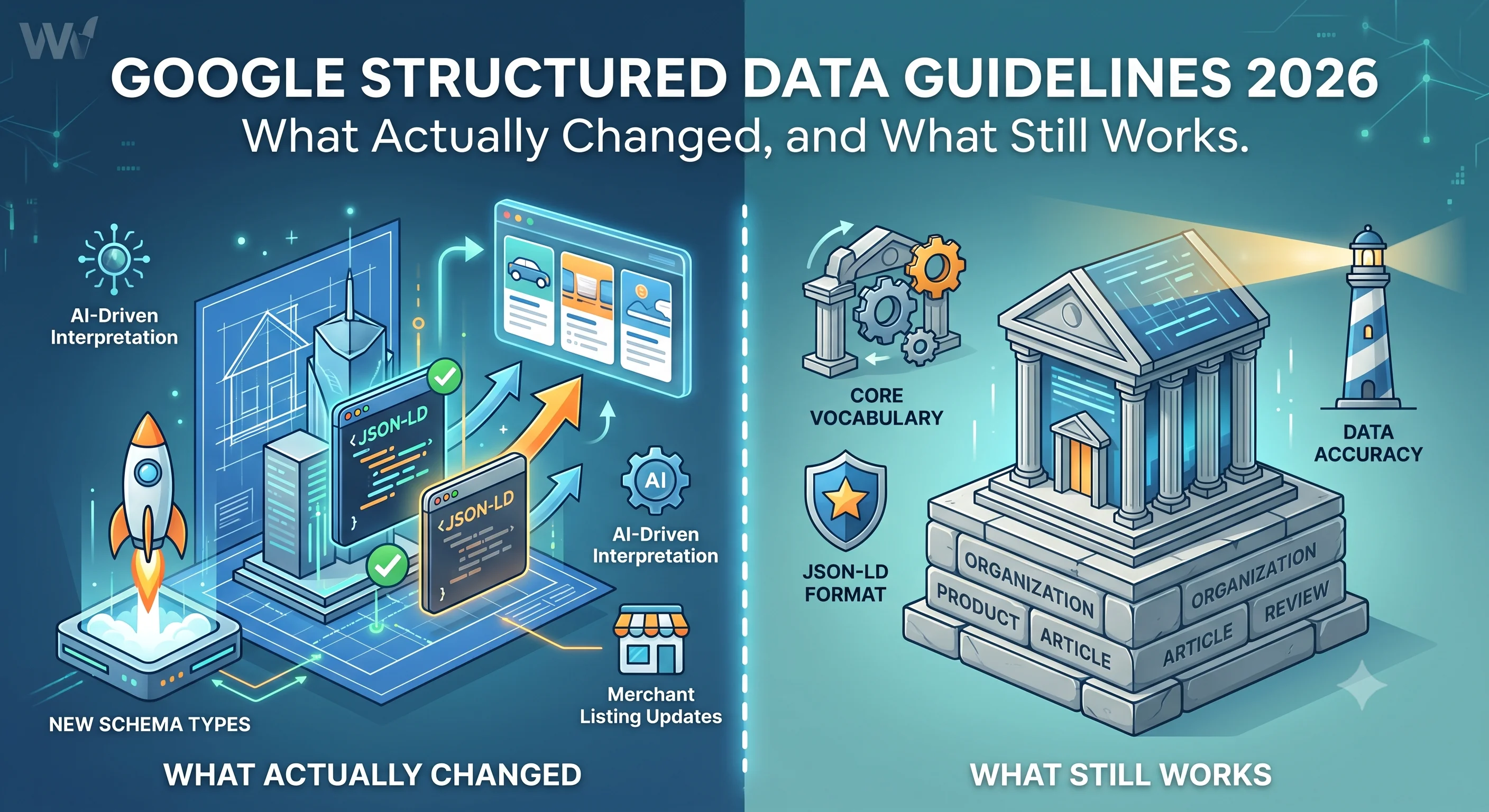
[ ] Implement schema markup (LocalBusiness, Service, Review, FAQ)
[ ] Fix any crawl errors or broken links
[ ] Test every page on multiple mobile devices
[ ] Set up call tracking and form conversion tracking
Days 29–30: Launch and Monitor
[ ] Launch the site or relaunch with new optimisation
[ ] Announce the update to your existing customer base
[ ] Submit your sitemap to Google
[ ] Begin actively requesting Google reviews
[ ] Monitor enquiries and adjust based on data
13. Conclusion
A builder's website in 2026 is not a brochure. It is a sales engine. It is the first impression you make on a homeowner who has just discovered a crack in their wall, a leak in their roof, or a dream of a new kitchen. It is the difference between them calling you or calling your competitor.
Lead generation web design for builders is not about tricks or hacks. It is about understanding your customer, removing every barrier between their need and your quote form, and building a site that earns their trust before they ever pick up the phone.
It means fast loading website design for contractors that works on a cracked iPhone screen. It means automated quote funnel for field services that books enquiries into your calendar while you are on site. It means local SEO for contractors that puts you in front of homeowners searching in your area. It means Google business profile optimization for trades that dominates the Map Pack. And it means content that demonstrates your expertise, builds your authority, and converts visitors into lifelong customers.
The builders who invest in this approach are not just getting more enquiries. They are getting better enquiries. Pre-qualified homeowners who have seen your work, read your reviews, and understand your process before they ever speak to you. By the time the phone rings, the sale is half done.
Whether you tackle this yourself or partner with a web design agency for small business UK that understands the construction sector, the investment pays for itself. Because unlike a leaflet drop or a newspaper ad, a well-built lead generation website keeps working 24 hours a day, seven days a week, long after the initial build is complete.
Your competitors are already online. Some of them are already investing in lead generation. The only question is whether your website will be the one that captures the next enquiry — or whether you will let them take it.
Frequently Asked Questions
Q: How long does it take to see results from a lead generation builder website?
A: For local SEO and GBP optimisation, you should see initial improvements in 4–8 weeks. For organic rankings in competitive areas, 3–6 months. The quote funnel and conversion improvements can show results immediately after launch.
Q: What is the most important feature on a builder's website?
A: Click-to-call on mobile. Over 80% of your visitors are on phones, often in urgent situations. If they cannot tap your number and call instantly, you are losing jobs.
Q: How much should a lead generation builder website cost?
A: A professional lead generation site for a builder typically costs £2,500–£5,500 to build, with ongoing SEO and maintenance from £150–£400/month. The ROI is usually clear within the first few months.
Q: Do I need a quote funnel, or is a contact form enough?
A: A basic contact form captures low-intent enquiries. A quote funnel pre-qualifies leads, captures more detail, and integrates with your workflow. For builders serious about scaling, a funnel is essential.
Q: How do I get more Google reviews as a builder?
A: Ask every satisfied customer immediately after completion. Send them a direct link via text message. Make it as easy as possible. Respond to every review professionally.
Q: Should I show pricing on my builder website?
A: Yes, at least in ranges. "Kitchen extensions from £25,000" builds trust and filters out tyre-kickers. Exact quotes require a site visit, but transparency about ballpark figures converts better than mystery.
Q: What is schema markup, and do builders need it?
A: Schema is structured data that helps Google understand your content. For builders, LocalBusiness and Service schema are essential. They enable rich results and improve local rankings.
Q: Can I build a lead generation site myself?
A: You can use page builders and templates, but you will compromise on speed, SEO, and conversion optimisation. For a business-critical asset, professional builder website development delivers better long-term results.
Ready to turn your builder website into a lead machine? See our process, explore our services, view our work, read more on our blog, check our pricing, see frequently asked questions, or contact us for a fixed-quote consultation.