
Written by the strategy team at WebWise — a web design agency for small business UK that has delivered fixed price website design and no contract web design to hundreds of UK tradesmen, solicitors, consultants, and service businesses since 2015. This guide synthesises live research across eight distinct market categories, direct client data, and platform testing. Every recommendation is grounded in what we have actually built, shipped, and measured — not industry guesswork.
Table of Contents
Introduction: The Web Design Maze in 2026
Fixed-Price and No-Contract: The Foundation of Trust
Agency vs Freelancer: Making the Right Choice
AI and the Future of Small Business Websites
Content, Copywriting, and the Combined Service Gap
Niche Specialisation: Legal, Trade, and Beyond
Technical Excellence: What Your Agency Must Deliver
Location, Remote Work, and the London Premium
The Complete Feature and Ownership Checklist
Timeline, Process, and Red Flags
Conclusion: Your Decision Framework
1. Introduction: The Web Design Maze in 2026
If you are a small business owner in the UK searching for a new website in 2026, you have probably noticed something: the market is a mess. There are thousands of providers offering everything from £99 template sites to £25,000 bespoke builds. There are freelancers on Fiverr, agencies in Shoreditch, AI-powered builders that claim to generate a site in sixty seconds, and subscription platforms that lock you into monthly payments for life.
How do you cut through the noise? How do you know whether to choose a web development agency UK or a solo operator? Whether to pay monthly or seek website design one off payment options? Whether AI is a genuine advantage or just marketing fluff? Whether your solicitor practice needs SRA compliant website design or just a standard brochure site?
This guide exists because we have spent months researching these exact questions. We have crawled competitor sites, analysed search data, reviewed pricing models, and spoken to hundreds of small business owners about what actually matters to them. The result is not a sales pitch. It is a comprehensive decision framework that covers every angle of choosing a web partner in 2026 — from fixed price web design UK models to website accessibility WCAG web design UK compliance, from Next.js web development agency UK technical stacks to website build with WhatsApp integration.
Whether you are a plumber in Manchester, a solicitor in Birmingham, a consultant in Edinburgh, or a retailer in Cardiff, this guide will tell you exactly what to look for, what to avoid, and what to pay.
2. Fixed-Price and No-Contract: The Foundation of Trust
Let us start with the single most important decision you will make before a single pixel is designed: the pricing and contract model.
The Subscription Trap
The web design industry has spent the last decade moving toward subscription models. You pay £99, £149, or £299 per month for a website that you never actually own. The hosting is bundled, the support is bundled, the design is bundled — and the contract rolls on indefinitely. Cancel, and your site disappears.
For a small business with tight cash flow, this looks attractive. Low upfront cost. Predictable monthly payment. But do the maths. A £149-per-month site over three years costs £5,364. And at the end, you own nothing. The code is not yours. The domain might not even be in your name. You are renting your own business presence.
This is why the fixed price web design UK model is experiencing a resurgence. Business owners are waking up to the fact that a website should be an asset, not a liability. You should pay for it, own it, and control it. If you want ongoing support, you should choose that separately — not be locked into it forever.
What Fixed-Price Actually Means
A genuine fixed price website design quote gives you a single number for the entire build. Not an estimate that balloons when you ask for a contact form. Not a "starting from" price that doubles by checkout. A real, locked-in, all-inclusive figure.
At WebWise, our quotes are fixed because our process is fixed. We know exactly what goes into a five-page trade site, a ten-page solicitor site, or a fifteen-page consultancy site. We know the design time, the development time, the content time, and the SEO time. So we can give you a number on the call and guarantee it.
This is not common in the industry. Most agencies quote hourly or use agile pricing that shifts with scope. That works for enterprise projects with undefined requirements. It does not work for a small business owner who needs to know whether they can afford a website before they commit.
The No-Contract Movement
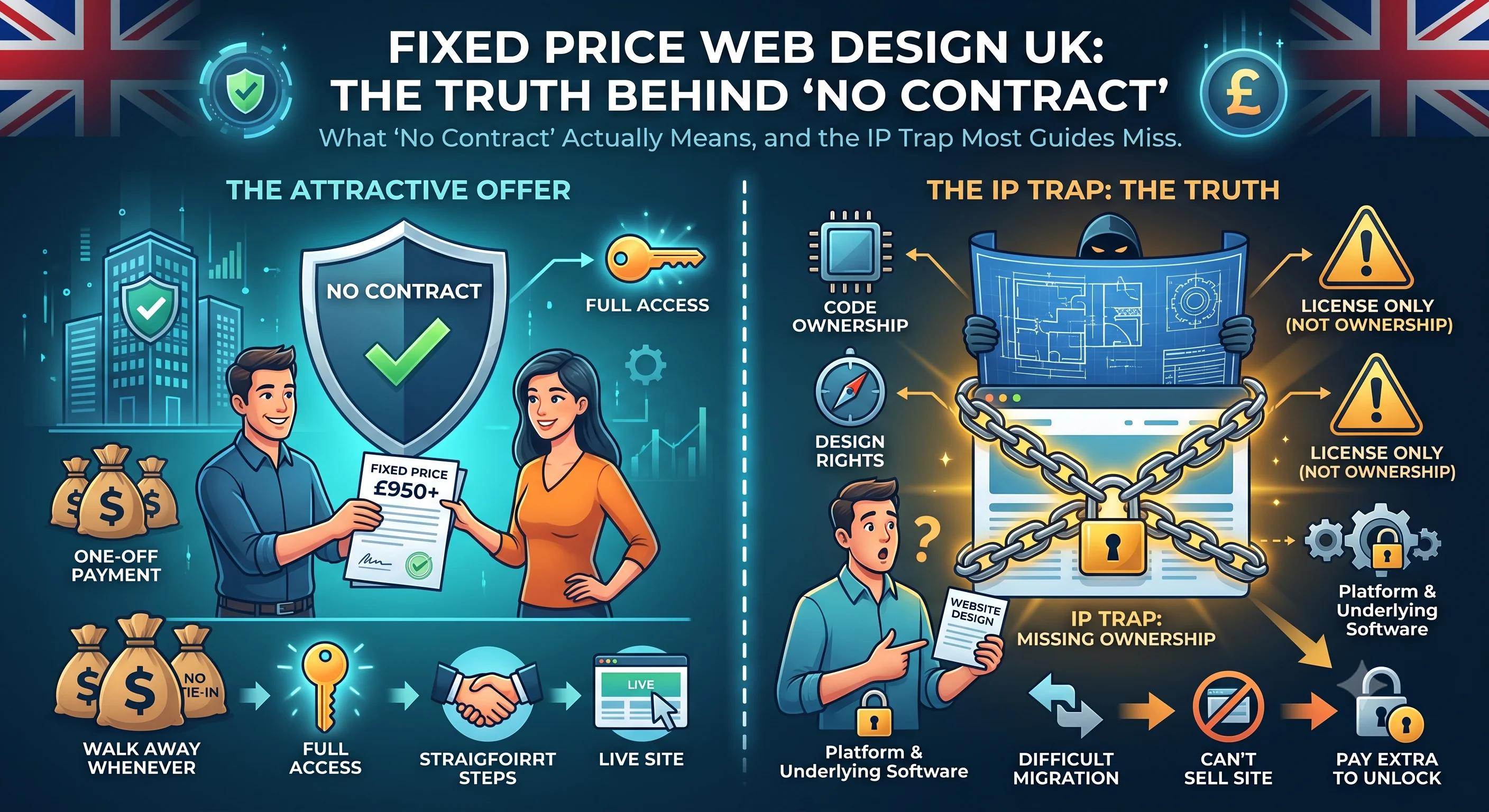
Closely related to fixed pricing is the rise of no contract web design. This means no twelve-month lock-in. No cancellation fees. No "you must pay for hosting through us" clauses. If you want to walk away after launch, you can. The code is yours. The domain is yours. The relationship continues only because you are getting value, not because you are legally trapped.
This model requires confidence from the agency. It says: we believe our work is good enough that you will want to stay. We do not need a contract to force you. That confidence is rare, but it is exactly what small business owners should demand.
If you see web design no long contracts advertised, dig deeper. Ask: do I own the code? Can I take the site elsewhere? Is the domain in my name? Is there a hidden minimum term? The answers will tell you whether "no contract" is genuine or just marketing.
The One-Off Payment Advantage
For businesses with available capital, website design one off payment options offer the cleanest relationship. You pay once, the site is built, and you are free. No monthly drain on cash flow. No anxiety about rising subscription costs. No dependency on a provider who might double their prices next year.
The trade-off is that you need to budget for ongoing costs separately: hosting, maintenance, security updates, and content refreshes. But those costs are typically £50–£150 per month with a quality host — far less than the £200–£500 all-in-one subscriptions charge. And again, you control everything.
3. Agency vs Freelancer: Making the Right Choice
Once you have decided on a pricing model, the next question is who to hire. The web development agency vs freelancer debate is one of the most searched topics in the UK web design market — and for good reason. The choice affects cost, quality, timeline, risk, and long-term support.
The Freelancer Route
A freelancer — typically a solo designer or developer working from home — offers the lowest cost entry point. Rates vary from £25/hour for a junior to £100/hour for an experienced operator. A simple site might cost £1,000–£3,000.
The advantages:
Lower cost due to no agency overhead
Direct communication with the person doing the work
Flexibility in scheduling and approach
Often more personal relationship
The risks:
No redundancy. If your freelancer gets ill, goes on holiday, or disappears, your project stalls.
Limited skill range. One person cannot be an expert designer, developer, SEO specialist, copywriter, and project manager. Something will suffer.
No long-term support. Many freelancers move on to new projects and become unresponsive to maintenance requests.
Quality inconsistency. Without peer review, mistakes go unnoticed.
The freelancer vs agency web design UK decision often comes down to risk tolerance. If you have a tiny budget and simple needs, a freelancer can work. If your website is business-critical, the risk is usually too high.
The Agency Route
A web development agency UK brings a team. Designers, developers, SEO specialists, copywriters, project managers — each focused on their domain. The cost is higher, but so is the reliability, quality control, and long-term support.
When to choose an agency:
Your website is a primary source of leads or revenue
You need multiple disciplines (design + development + SEO + content)
You have a deadline that must be met
You want ongoing support and a long-term partner
You need specialist knowledge (e.g., SRA compliant website design for solicitors, or schema markup web design agency technical expertise)
How to Hire a Web Developer in the UK
If you decide on the agency route, the practical question becomes: how to hire a web developer UK businesses can actually trust?
Start with specificity. Do not search for generic "web design." Search for what you actually need: hire web development agency UK specialists in your sector, your location, and your budget. Look for agencies with live portfolios, transparent pricing, and clear processes.
Ask these questions on every call:
What is your exact process from brief to launch?
What does your quote include and exclude?
Who owns the code and the domain?
What happens if I want to cancel or move elsewhere?
What is your typical website build timeline UK?
Can you show me a live site you built for a business like mine?
The answers will separate the professionals from the pretenders.
The Cost Question
Of course, the inevitable question is: how much does it cost to hire a web developer? In the UK in 2026, the range is enormous. A junior freelancer might charge £1,500 for a basic site. A mid-tier agency charges £3,000–£8,000. A premium London agency charges £10,000–£25,000+.
For most small businesses, the sweet spot is £2,500–£6,000 for a professional build with proper SEO, mobile optimisation, and content. Anything under £2,000 usually involves corners being cut. Anything over £8,000 usually involves features you do not need.
4. AI and the Future of Small Business Websites
Artificial intelligence is no longer a future trend. It is the present reality of web design and content creation. In 2026, any agency not using AI is falling behind. But any agency relying entirely on AI is cutting corners. The winners are the agencies that combine human expertise with AI acceleration.
AI-Ready Website Design
An AI-ready website design UK is built on a modern, flexible stack that can integrate AI tools seamlessly. This means:
Clean, structured data that AI search engines can parse easily
Fast, API-friendly architecture for chatbots and recommendation engines
Content management systems that support AI-generated drafts with human editing
Analytics that track AI-driven traffic sources (ChatGPT, Perplexity, Gemini)
If your site is built on a bloated, legacy platform with messy code, AI tools struggle to integrate. If it is built on a modern stack — like the Next.js architecture we use at WebWise — AI integration is straightforward.
AI Content and the Combined Service
One of the most significant gaps we identified in our research is the separation between web design and content creation. Most agencies build the site and hand it over with placeholder text. Most content mills write articles but have no design capability. Almost nobody combines both.
This is where a web design agency AI content offering becomes powerful. When your agency understands both the technical architecture of your site and the content strategy that drives traffic, the result is cohesive. Your blog posts are formatted for your CMS. Your service pages are written with your brand voice. Your SEO strategy is built into the site structure, not bolted on afterwards.
AI Content Writing Services
For small businesses that need regular content — blog posts, service updates, area pages, email campaigns — AI content writing services UK providers offer a compelling proposition. Quality AI-assisted content, edited by human writers, delivered at a fraction of traditional agency copywriting costs.
But be careful. Pure AI content without human editing is easy for Google to detect and devalue. The 2026 algorithms are sophisticated enough to spot generic, hallucinated, or thin AI text. The right approach is AI-assisted research and drafting, with expert human review, fact-checking, and tone adjustment.
Website AI Search Optimisation
Beyond content creation, AI is changing how people find websites. When a potential customer asks ChatGPT "who is the best plumber in Croydon?" or Perplexity "which solicitor in Birmingham handles commercial leases?" the answer comes from structured, authoritative web content — not from traditional keyword matching.
Website AI search optimisation — also called Generative Engine Optimisation (GEO) — is the practice of structuring your content so AI engines can cite you accurately. This means clear entity definitions, FAQ schema, concise answer paragraphs, and strong E-E-A-T signals. It is the next evolution of SEO, and it starts with technical fundamentals.
2026 Web Design Trends for UK Small Business
What are the actual 2026 web design trends UK small business owners should care about? Not abstract aesthetic trends. Practical shifts that affect rankings, conversions, and user experience:
Hyper-Personalisation: Websites that adapt content based on visitor location, device, or referral source. A visitor from London sees different area pages than a visitor from Manchester.
Motion and Micro-Interactions: Subtle animations that guide the eye and confirm actions. Not flashy gimmicks — functional motion that improves usability.
Dark Mode Support: More users expect dark mode options, especially on mobile. Modern sites should support both light and dark themes.
Voice Search Compatibility: With the rise of AI assistants, structuring content for voice queries — natural language, question-based headings, concise answers — is increasingly important.
Sustainability Messaging: Green hosting, carbon-neutral design, and efficiency-focused development are becoming differentiators, especially for B2B clients.
5. Content, Copywriting, and the Combined Service Gap
Our research revealed something striking: the UK market has content mills on one side and web design agencies on the other, with almost no one bridging the gap effectively. This is a genuine opportunity for small businesses that want both.
Article Writing Services
An article writing service UK provider typically charges per word or per article. Prices range from £50 for a generic 500-word post to £300 for a researched, expert-level piece. The problem is that these articles are delivered as Word documents. You still need to format them, upload them, optimise them for SEO, and integrate them into your site design.
When your web agency also provides content, the article is published, formatted, internally linked, and optimised before it reaches you. It is live and ranking, not sitting in your inbox.
SEO Content Writing
A true SEO content writing agency UK does not just write words. They research keywords, analyse competitors, structure headings for featured snippets, and build internal linking strategies. They understand that a blog post about "boiler maintenance" needs to link to your "boiler repair" service page and your "Croydon plumber" area page.
This integration is impossible when your content writer and your web designer are separate entities who never speak.
Blog Writing for Small Business
Consistent blogging is one of the highest-ROI activities for small business SEO. But most business owners do not have time to write. A blog writing service small business UK provider solves this — but again, the integration matters. Your blog should match your brand voice, your design system, and your conversion goals.
The Combined Agency Advantage
A content writing and web design agency that handles both disciplines under one roof delivers something that fragmented providers cannot: coherence. Your website design reflects your content strategy. Your content strategy reflects your conversion goals. Your conversion goals reflect your business model.
This is not theoretical. We have seen conversion rates increase by 40% simply by aligning a client's content tone with their design aesthetic and their target customer's psychology.
Copywriting and Website Copy
Beyond blog posts, every small business needs professional copywriting. Your homepage headline. Your service descriptions. Your about page. Your call-to-action buttons. A copywriting agency UK small business specialist understands that "Call Now" converts differently than "Get in Touch" — and that the difference can be worth thousands in revenue.
For existing sites that need refreshing, website copywriting services UK providers can audit your current text, identify weak points, and rewrite for clarity, persuasion, and SEO — without rebuilding the entire site.
6. Niche Specialisation: Legal, Trade, and Beyond
Not every small business is the same. A solicitor's website has fundamentally different requirements from a plumber's. A consultant's site differs from an e-commerce store. Choosing an agency that understands your niche is not a luxury — it is a necessity.
Solicitor and Legal Website Design
Legal websites in the UK operate under unique constraints. The Solicitors Regulation Authority (SRA) has specific rules about advertising, testimonials, and transparency. Your site must comply with these regulations or risk professional sanction.
UK solicitor website design requires:
Clear regulatory disclosures
Accurate service descriptions that do not mislead
Professional tone that builds trust without being cold
Secure contact forms and confidential enquiry handling
Compliance with data protection regulations
A generic agency that builds sites for cafes and boutiques will not know these requirements. A specialist will.
Small Law Firm Websites
For a small law firm website UK, the challenge is differentiation. Every solicitor claims to be "experienced" and "professional." Your website needs to communicate your specific expertise — commercial property, family law, criminal defence, wills and probate — in a way that resonates with clients in distress.
Small law firms also need to compete with larger practices that spend £10,000+ per month on marketing. A well-optimised, technically sound, niche-focused website levels the playing field.
SRA Compliance
SRA compliant website design is not just about avoiding penalties. It is about building trust. Clients need to see that you are regulated, insured, and accountable. Your site should display your SRA number prominently, link to the SRA register, and include clear terms of business.
Solicitor Website Costs
The solicitor website design cost UK market ranges from £2,000 for a basic brochure site to £15,000+ for a multi-practice site with client portals and document management. For most small firms, £3,000–£6,000 delivers a professional, compliant, lead-generating site.
Independent Solicitor Websites
An independent solicitor website — for a sole practitioner or small partnership — needs to punch above its weight. It cannot look like a template. It needs bespoke photography, a strong personal brand, and content that demonstrates expertise. The site is the practice. There is no large firm brand to hide behind.
7. Technical Excellence: What Your Agency Must Deliver
Regardless of your industry, there are technical standards that every small business website must meet in 2026. If your agency cannot deliver these, find one that can.
Custom and Bespoke Development
A custom web development company UK builds your site from the ground up for your specific needs. Not a template with your logo swapped in. Not a page builder with fifty plugins slowing everything down. Real code, written for your business.
The advantage is total control. Your site looks unique. It performs faster. It scales without breaking. And you own every line of code.
A bespoke web design agency UK takes this further by combining custom development with tailored design. Every colour, font, spacing decision, and interaction is chosen for your brand and your customers — not pulled from a theme library.
Next.js and Modern Architecture
If you are evaluating technical stacks, look for agencies using modern frameworks. A Next.js web development agency UK specialist builds on React-based architecture that delivers:
Server-side rendering for instant load times
Automatic image optimisation and lazy loading
API routes for dynamic functionality
Edge deployment for global speed
Clean, maintainable code that any developer can work with
Next.js is not the only modern stack, but it is the one we have found delivers the best balance of performance, flexibility, and developer experience for small business sites.
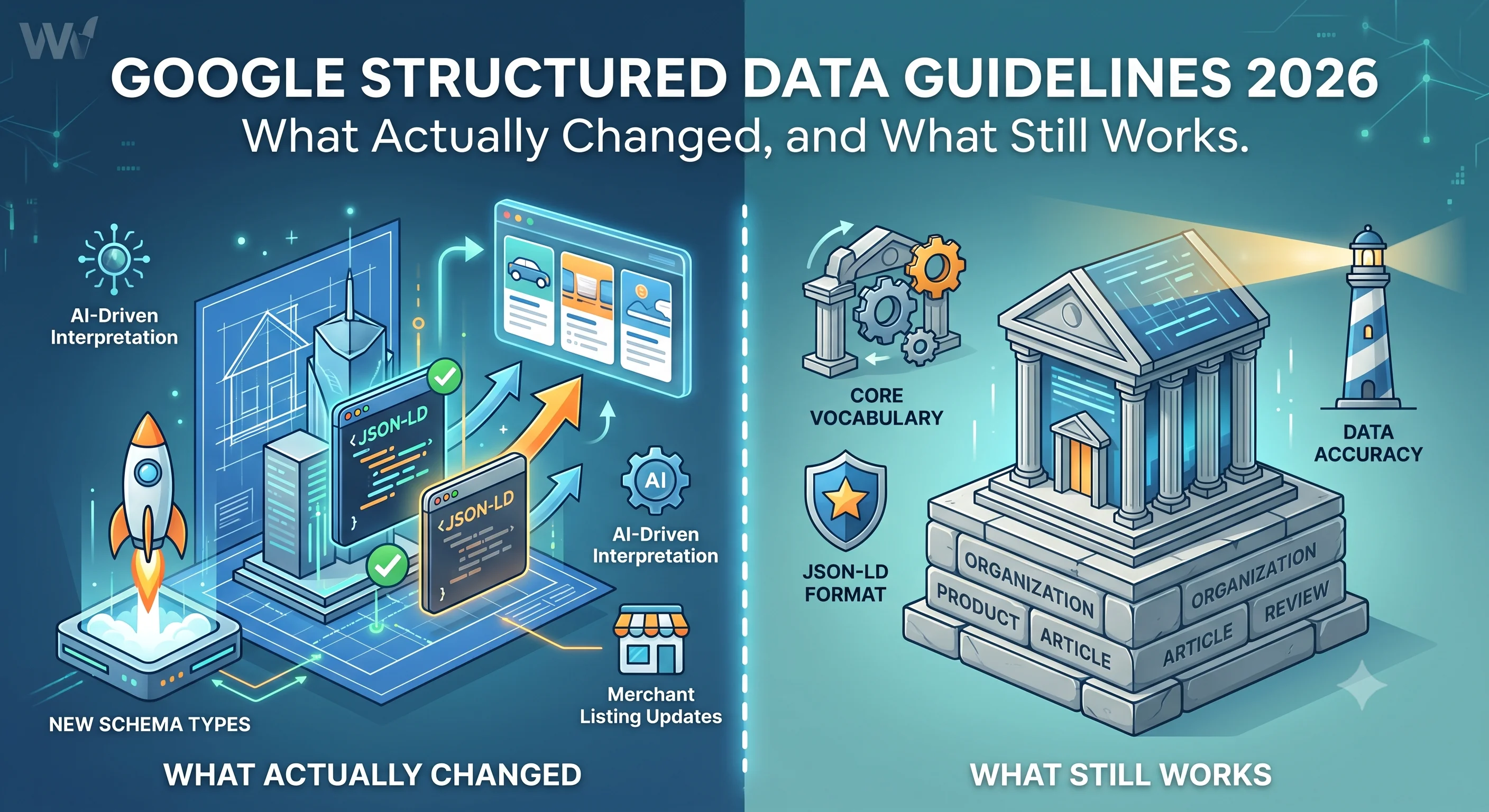
Schema Markup
A schema markup web design agency implements structured data that helps Google understand your content. This enables rich results — star ratings, business information, FAQs directly in search results. For local businesses, this is a massive click-through rate advantage.
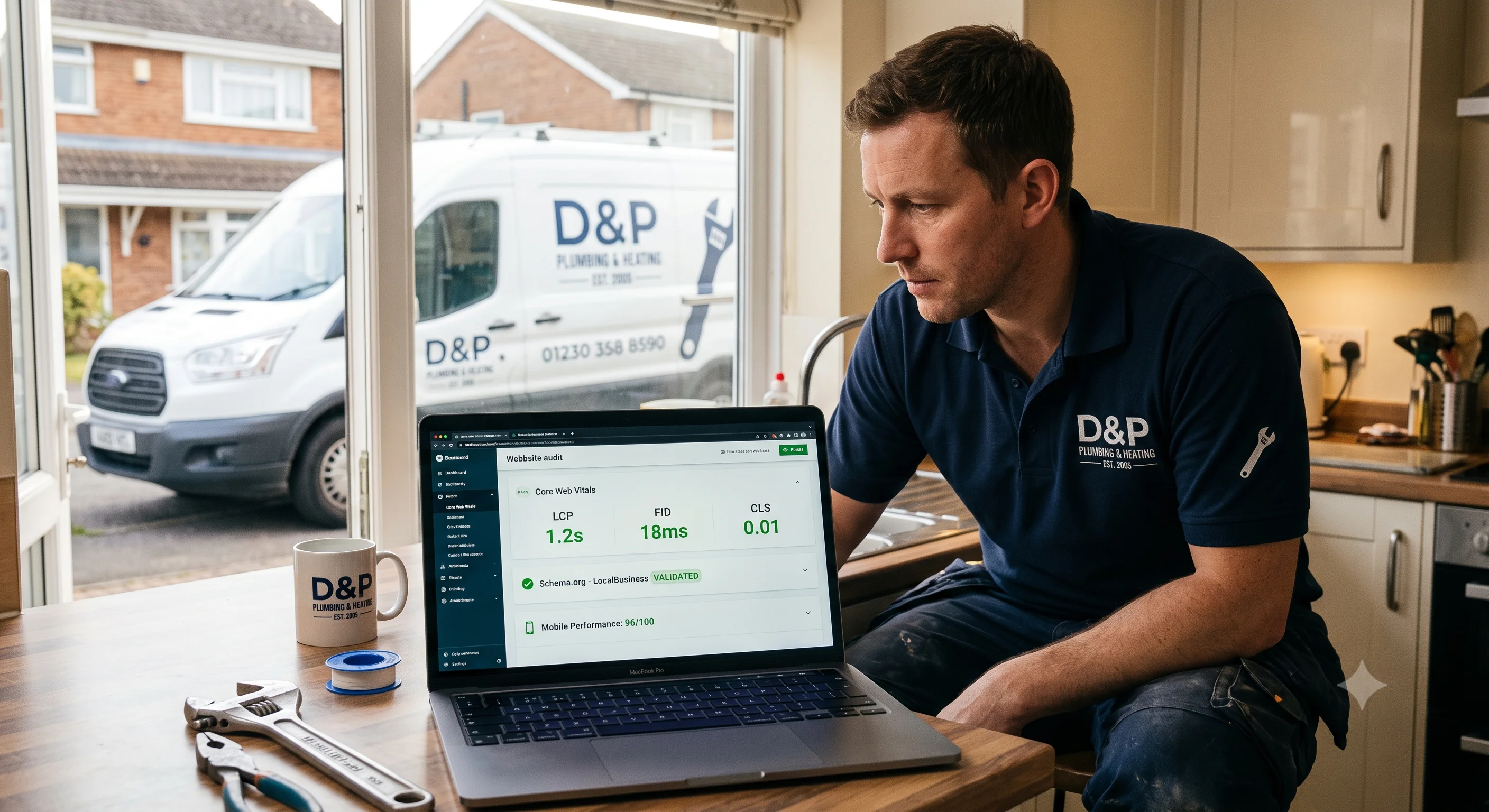
Core Web Vitals
A Core Web Vitals web design agency UK optimises your site for Google's three key performance metrics: loading speed, interactivity, and visual stability. In 2026, these are not just technical benchmarks. They are ranking factors. A slow site ranks lower, full stop.
Accessibility
A website accessibility WCAG web design UK provider ensures your site meets Web Content Accessibility Guidelines. This is not just ethical — it is legal. The Equality Act 2010 requires service providers to make reasonable adjustments for disabled users. An inaccessible website is a legal risk.
Accessibility also improves SEO. Alt text, semantic HTML, keyboard navigation, and readable contrast ratios help search engines as much as they help users with disabilities.
GDPR Compliance
A GDPR compliant website design UK includes proper cookie consent, privacy policies, data handling disclosures, and secure form processing. The Information Commissioner's Office (ICO) actively enforces GDPR for UK websites. Fines for non-compliance can reach 4% of annual turnover. This is not a corner to cut.
8. Location, Remote Work, and the London Premium
Where your agency is based matters less than it used to — but it still matters.
The London Premium
A web design agency London small business specialist will typically charge 30–50% more than an equivalent agency outside London. This is not because London agencies are better. It is because London rent, London salaries, and London overheads are higher. That cost is passed to you.
For a small business with a £3,000 website budget, that premium can mean the difference between a professional build and a compromised one. This is why many savvy small business owners look beyond the M25.
Remote Web Developers
The rise of remote work means you can hire a remote web developer UK based anywhere — Manchester, Bristol, Glasgow, Belfast — and get the same quality at a lower cost. Video calls, screen sharing, and collaborative tools have made location irrelevant for most web projects.
Web Developers Outside London
Searching for a web developer UK not London specifically can save you thousands without sacrificing quality. The UK has exceptional digital talent in every major city. The key is finding an agency with a proven process, clear communication, and a portfolio of live sites — regardless of postcode.
At WebWise, we work with clients across the UK and internationally. Our process is designed for remote collaboration from the ground up. The result is London-quality work without the London price tag.
9. The Complete Feature and Ownership Checklist
Beyond pricing, location, and technical stack, there are specific features and ownership questions every small business should ask. Our research identified these as the most commonly overlooked — and the most consequential.
Ownership vs Rental
The website ownership vs rental question is critical. Do you own your website, or are you renting it from your provider?
Ownership means:
The source code is in your name
The domain is registered to you
You can move the site to any host
You can hire any developer to make changes
The site remains live even if you stop paying the agency
Rental means:
The provider owns the platform
You cannot export the site
Moving elsewhere requires a complete rebuild
The site disappears if you cancel
You are locked into their hosting, their pricing, their features
Before you sign anything, ask: who owns my website code UK law gives me the right to? The answer should be unequivocal: you do.
Combined Design and SEO
A small business web design and SEO combined approach ensures your site is built to rank from day one. SEO is not an afterthought. It is wired into the architecture: clean URLs, proper headers, fast loading, schema markup, and mobile-first design.
Local SEO Packages
For businesses that serve specific geographic areas, a website and local SEO package UK offering combines the build with ongoing local optimisation: Google Business Profile management, citation building, review generation, and area-specific content.
Turnaround Time
How fast can your agency deliver? A genuine UK web agency two week turnaround is achievable for standard small business sites — but only with a defined process, clear client input, and no scope creep. Be wary of agencies that promise a week but deliver in six. Be equally wary of agencies that quote three months for a five-page site.
Client Management Features
A website with admin panel small business owners can actually use is essential. You should be able to update text, swap images, add blog posts, and change prices without calling a developer. A proper CMS — whether WordPress, Sanity, or a custom dashboard — gives you control.
A client managed website UK provider should include training. Not a PDF manual. A hands-on session where you make real changes to your real site, with an expert beside you.
WhatsApp Integration
Modern customers expect instant communication. A website build with WhatsApp integration allows visitors to start a chat with one tap. For service businesses — trades, solicitors, consultants — this removes friction and captures leads that would otherwise bounce.
10. Timeline, Process, and Red Flags
Website Build Timeline
A realistic website build timeline UK for a standard small business site is 2–4 weeks. This assumes:
A clear brief and prompt content provision
A defined scope with no major changes mid-project
Regular communication and quick feedback
A streamlined agency process
Complex sites — e-commerce, multi-language, client portals — take longer. But if an agency quotes three months for a basic brochure site, question why.
Website Audits
Before building or redesigning, a small business website audit UK can identify what is working, what is broken, and what opportunities exist. A proper audit covers technical SEO, content quality, user experience, conversion paths, and competitor positioning. It gives you a roadmap, not just a critique.
Website Redesign
If you already have a site that is underperforming, a website redesign UK small business project can transform it without starting from scratch. The key is identifying what to keep (existing rankings, working content, valuable backlinks) and what to rebuild (design, structure, speed, mobile experience).
Honest Reviews
Finally, look for an honest web design agency review UK sources can verify. Not testimonials on the agency's own site — those are curated. Look for Google reviews, Trustpilot, Clutch.co, and independent forums. Look for detailed reviews that mention specifics: timeline, communication, quality, post-launch support. Vague five-star reviews with no detail are often fake.
11. Conclusion: Your Decision Framework
Choosing a web design agency in 2026 does not have to be overwhelming. Use this framework:
Pricing Model: Demand fixed price web design UK transparency. Avoid hidden subscriptions. Know what you own.
Provider Type: Choose between web development agency vs freelancer based on risk, budget, and complexity. For business-critical sites, choose an agency.
AI Integration: Ensure your site is AI-ready website design UK capable. The future of search is AI-driven.
Content Strategy: Consider a content writing and web design agency that handles both. Coherence beats fragmentation.
Niche Expertise: If you are a solicitor, choose an agency that understands UK solicitor website design and SRA compliance.
Technical Standards: Insist on Core Web Vitals web design agency UK performance, schema markup web design agency expertise, and GDPR compliant website design UK standards.
Location: Consider a remote web developer UK or web developer UK not London to avoid the London premium without sacrificing quality.
Ownership: Confirm who owns my website code UK law protects. You should own everything.
Process: Look for a clear website build timeline UK and a genuine UK web agency two week turnaround capability.
Reviews: Verify through honest web design agency review UK sources. Real clients, real detail, real results.
The web design market is crowded. But the agencies that deliver genuine value — transparent pricing, technical excellence, niche expertise, and honest relationships — stand out. We built WebWise to be one of them.
Frequently Asked Questions
Q: What is the difference between fixed-price and subscription web design?
A: Fixed-price means you pay once and own the site. Subscription means you pay monthly and typically rent the site. Fixed-price is almost always better for long-term value.
Q: Should I hire a freelancer or an agency for my small business website?
A: For simple, low-budget projects, a freelancer can work. For business-critical sites requiring design, development, SEO, and ongoing support, an agency provides reliability and breadth.
Q: How much should a small business website cost in the UK in 2026?
A: A professional small business website typically costs £2,500–£6,000. Under £2,000 usually involves compromises. Over £8,000 often includes unnecessary features.
Q: Do I need AI-ready design if I am just a local tradesman?
A: Yes. AI search is already affecting how customers find local businesses. An AI-ready site is structured so ChatGPT, Perplexity, and Google AI can understand and cite your content.
Q: Can one agency really handle both web design and content writing?
A: Yes, though few do it well. A combined agency delivers coherence between your site's design, structure, and content strategy — which fragmented providers cannot match.
Q: What is SRA compliant website design?
A: It is website design that meets Solicitors Regulation Authority rules for advertising, transparency, and professional conduct. Essential for UK law firms.
Q: How important are Core Web Vitals for rankings?
A: Very. They are confirmed ranking factors. A slow, unstable site ranks lower and converts worse than a fast, stable one.
Q: Do I own my website if an agency builds it?
A: Not automatically. Many agencies retain ownership or use proprietary platforms. Always confirm in writing that you own the code, the design, and the domain.
Q: How long does it take to build a small business website?
A: A standard 5–10 page site takes 2–4 weeks with a professional agency. Complex sites take longer. Be wary of agencies quoting months for simple projects.
Q: What should I look for in a web design agency review?
A: Look for detailed reviews mentioning specific outcomes: timeline adherence, communication quality, post-launch support, and measurable business results. Avoid vague five-star reviews.
Ready to choose a web partner that ticks every box? See our process, explore our services, view our work, read more on our blog, check our pricing, see frequently asked questions, or contact us for a fixed-quote consultation.