
Can I get a website built quickly and affordably?
For decades, the commercial web development industry operated under an unyielding trade-off known as the Project Management Triangle: you could choose a website that was built quickly, built affordably, or engineered for high quality, but you could never select all three.
If a business required an affordable build delivered on a tight schedule, the traditional market offered only low-quality solutions: generic template installations, fragile drag-and-drop page builders, or bloated monolithic content management systems. These low-cost setups frequently suffered from slow mobile rendering speeds, hidden monthly plugin fees, critical security vulnerabilities, and zero organic search visibility. Conversely, if a enterprise sought a fast, custom-coded, search-optimized platform, traditional digital agencies quoted four-month development timelines and expensive retainer budgets.
In 2026, advances in modern software engineering have permanently shattered this trade-off. When business owners, procurement leads, and trade executives ask if they can get a website built quickly and affordably, the definitive technical answer is yes—provided the platform is constructed on modern edge infrastructure rather than legacy software stacks.
Achieving speed, affordability, and enterprise-grade performance simultaneously requires a fundamental transition away from monolithic, database-bound site builders toward modular component architecture, edge pre-rendering, and automated continuous integration pipelines.
In our engineering deployments at webwise digital, we have replaced slow, unpredictable development cycles with structured, two-week technical sprints. By leveraging pre-engineered UI component systems and headless backend architectures, we deliver sub-second, search-optimized web platforms at a transparent fixed price.
This exhaustive technical manual analyzes how modern web engineering makes rapid, cost-effective deployments possible, breaking down the exact architectural frameworks, deployment protocols, and long-term financial advantages.
1. Deconstructing the Traditional "Fast, Cheap, or Good" Fallacy
To understand how high-performance websites can be built rapidly without prohibitive costs, one must first examine why legacy development methods failed to deliver this balance.
The Hidden Costs of Legacy Monolithic CMS Frameworks
For over fifteen years, small businesses and enterprise organizations relied on monolithic CMS architectures (such as legacy WordPress installations) or proprietary closed-loop site builders. While these platforms promised low initial setup costs and rapid template deployment, they introduced severe technical debt that eroded commercial value over time.
Render-Blocking Plugin Bloat: To add basic functionality—such as custom contact forms, image galleries, security firewalls, or search optimization tags—legacy platforms rely on stacking dozens of third-party plugins. Each plugin injects its own render-blocking JavaScript and CSS files into the browser execution thread, degrading mobile performance.
Database Latency and Server Overheads: Monolithic systems process every user request by querying a centralized SQL database, dynamically executing PHP code, and assembling the HTML document on the fly. This architecture results in slow Time to First Byte (TTFB) metrics, often taking between 1.5 and 4.0 seconds just to send the first byte of data to a mobile user.
Continuous Vulnerability Patching: Because legacy CMS frameworks account for a massive percentage of global web traffic, they are continuously targeted by automated botnets and credential-stuffing scripts. Maintaining security requires ongoing software updates, database repair work, and expensive emergency developer interventions.
The Modern Paradigm Shift: Component-Driven Edge Engineering
Modern web design eliminates monolithic bottlenecks by decoupling the visual presentation layer from backend databases. Rather than assembling pages on a distant server during every user visit, modern frameworks pre-render static HTML pages at build time and distribute them across a global Content Delivery Network (CDN) edge infrastructure.
By utilizing modular React and Next.js component libraries, senior software engineers can assemble custom, fully branded user interfaces in days rather than months. Because the code is clean, lightweight, and compiled ahead of time, the resulting application achieves perfect mobile speed scores while drastically reducing the developer hours required to build it.
When evaluating a wordpress alternative, decision-makers quickly realize that modern edge pre-rendering delivers vastly superior security, zero database maintenance, and sub-second page loads at a fraction of the long-term operational cost.
2. Engineering Architecture: How Speed and Affordability Are Achieved
Building a high-performance web platform quickly requires an engineering workflow designed to eliminate redundant tasks and streamline asset pipelines. At webwise, our architectural stack relies on four core technical pillars.
Pillar 1: Modular Component Systems and Design Tokens
Instead of writing CSS styles from scratch for every new page or dragging fragile visual blocks around a WYSIWYG editor, modern builds leverage structured design systems built with utility-first CSS (such as Tailwind CSS) and modular component repositories.
Engineers establish a unified global design token configuration that defines:
Fluid Typography Rules: Mathematical scaling ratios using CSS
clamp()functions that automatically adapt typography size across mobile, tablet, and desktop viewports without requiring manual breakpoint tweaks.Accessible Color Systems: Strict WCAG 2.2 Level AA compliant contrast ratios hardcoded into root CSS variables.
Reusable UI Components: Pre-tested, accessible components (such as sticky conversion headers, multi-step quote forms, modal dialogs, and image carousels) that are instantiated instantly across different template views.
This modular approach cuts front-end assembly time by up to 60% while ensuring 100% visual consistency across the entire application.
Pillar 2: Next.js Edge Pre-Rendering and Static Site Generation
To deliver exceptional speed without high server hosting overheads, modern applications utilize next.js development architectures.
Static Site Generation (SSG): During the automated deployment process, the build engine compiles markdown files, headless CMS data, and React code into pure static HTML, CSS, and SVG assets.
Global Edge Distribution: These compiled assets are pushed directly to edge servers globally (such as Cloudflare Pages or Vercel Edge Network). When a user requests your site, the page is served from an edge node located geographically closest to them, achieving TTFB response times under 40 milliseconds.
Zero Database Queries at Runtime: Because there is no active database query executing when a user visits a page, the site cannot crash under sudden traffic spikes, nor can it be compromised via traditional SQL injection attacks.
Pillar 3: Headless Content Management Systems (CMS)
Decoupling content management from front-end rendering allows marketing teams to edit text, upload project photography, and publish technical blog posts without touching production code or risking layout breaks.
By connecting headless CMS platforms (such as Sanity, Strapi, or Contentful) via lightweight GraphQL or REST APIs, content is fetched during the static build phase or dynamically updated at the edge using Incremental Static Regeneration (ISR). This setup provides the editing flexibility of a traditional CMS alongside the performance and security of custom-coded software.
Pillar 4: Automated Image and Media Pipelines
Uncompressed imagery is the single largest cause of mobile website slowdowns. In legacy site builds, team members must manually resize, crop, and compress every photograph prior to upload.
Modern engineering pipelines automate media optimization entirely:
Next-Generation Formats: Original image uploads are automatically converted into AVIF and WebP formats at build time, reducing file sizes by up to 80% with zero loss in visual quality.
Dynamic Viewport Resizing: The layout engine automatically generates
srcsetimage attributes, serving small 400px image variants to mobile smartphones and full-resolution assets to 4K desktop displays.Layout Shift Prevention: Dimensions are calculated automatically to reserve layout space, eliminating visual jumps during asset loading.
3. Core Web Vitals Optimization in Rapid Builds
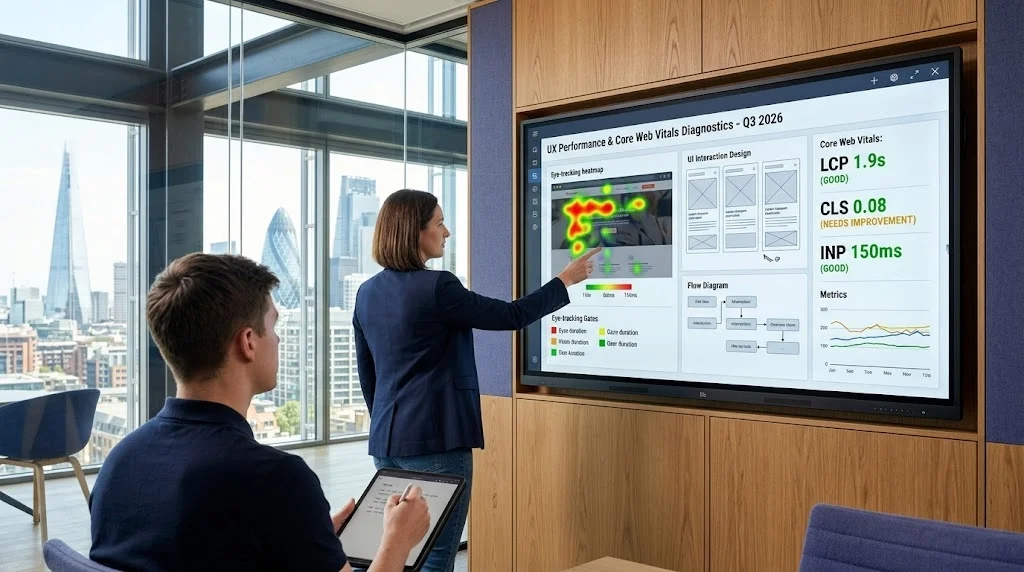
A common misconception is that a website built quickly must sacrifice technical search engine optimization. In reality, when a site is constructed on a clean, component-driven edge architecture, passing Google's Core Web Vitals assessment occurs natively as a byproduct of clean code.
Plaintext
[CORE WEB VITALS BENCHMARK TARGETS FOR 2026]

Metric 1: Largest Contentful Paint (LCP)
  ├── Poor: > 4.0 Seconds
  ├── Needs Improvement: 2.5s - 4.0s
  └── GOOD (Target): < 1.2s - 2.5s (Achieved natively via Edge Pre-rendering)

Metric 2: Interaction to Next Paint (INP)
  ├── Poor: > 500 Milliseconds
  ├── Needs Improvement: 200ms - 500ms
  └── GOOD (Target): < 75ms - 200ms (Achieved via Zero-Dependency JavaScript)

Metric 3: Cumulative Layout Shift (CLS)
  ├── Poor: > 0.25
  ├── Needs Improvement: 0.10 - 0.25
  └── GOOD (Target): < 0.05 (Achieved via Pre-Allocated Aspect Ratios)
Eliminating Render-Blocking Assets for LCP
To guarantee sub-second Largest Contentful Paint (LCP) times, modern front-end architectures extract critical CSS required for above-the-fold content and inline it directly into the HTML <head>. Non-critical scripts and analytics packages are deferred or loaded using web workers, ensuring the browser renders primary visual text and hero media instantly.
Minimizing Main-Thread Latency for INP
Interaction to Next Paint (INP) measures how rapidly a page updates visually after a user taps a button, opens a slide-out navigation drawer, or submits a form. By writing zero-dependency vanilla JavaScript or lightweight React components, main-thread blocking time is kept under 50 milliseconds, ensuring instant touch responsiveness on budget mobile hardware.
Establishing Machine-Readable Structured Data
In addition to physical speed, search engine bots require structural clarity to understand your business offerings. Modern rapid builds automatically inject structured JSON-LD schema graphs directly into page headers.
By defining your business entity, physical service locations, pricing parameters, and service offerings through machine-readable code, your platform gains immediate search relevance. Integrating specialized schema markup ensures search engine algorithms parse your site structure accurately without requiring months of manual adjustments.
4. The 2-Week Sprint Workflow: From Concept to Production
Understanding how a professional agency can deliver a custom, high-performance platform quickly requires examining the operational sprint structure. At WebWise Digital, we condense traditional four-month development cycles into a disciplined, two-week engineering deployment.
Plaintext
[THE 2-WEEK ENGINEERING SPRINT TIMELINE]

WEEK 1: ARCHITECTURE, DESIGN & CONTENT
  ├── Day 01 - 02: Discovery, Entity Mapping & Structural Wireframing
  ├── Day 03 - 04: High-Fidelity UI/UX Prototyping & Brand Integration
  └── Day 05: Content Architecture, Asset Optimization & Sign-Off

WEEK 2: FRONT-END BUILD, QA & EDGE DEPLOYMENT
  ├── Day 06 - 08: React/Next.js Code Assembly & API Integration
  ├── Day 09 - 11: Core Web Vitals Tuning, Cross-Device QA & Schema Validation
  └── Day 12 - 14: DNS Propagation, SSL Binding & Production Launch
Week 1: Scoping, UX Architecture, and Content Alignment
Days 1–2 (Discovery and Information Architecture): Senior architects analyze target buyer personas, search intent clusters, and conversion pathways. The site's sitemap and dynamic URL routing structures are locked down to prevent post-launch technical debt.
Days 3–4 (High-Fidelity UI/UX Prototyping): Designers construct pixel-perfect desktop and mobile layouts in interactive design environments. Layouts incorporate high-conversion UX principles, placing primary call-to-action triggers within natural mobile thumb zones.
Day 5 (Content Structure and Asset Finalization): Copywriting, brand photography, and client trust credentials (accreditations, review ratings, case study data) are compiled and formatted for the content layer.
Week 2: Code Assembly, QA Auditing, and Global Launch
Days 6–8 (Front-End & Back-End Code Engineering): Full-stack developers translate approved visual prototypes into modular React code, setting up Next.js routing, Tailwind CSS styling, and headless CMS API connections.
Days 9–11 (Performance Auditing and Device QA): The application undergoes automated and manual testing across physical mobile devices, tablets, and desktop browsers. Engineers verify WCAG accessibility compliance, validate JSON-LD schema, and optimize media delivery pipelines.
Days 12–14 (DNS Routing and Production Deployment): Name servers are mapped to global edge networks, SSL certificates are automatically bound, dynamic XML sitemaps are submitted to search consoles, and final pre-launch diagnostic checks are executed.
Partnering with a specialized custom web development company that enforces this disciplined sprint methodology ensures your web platform goes live on schedule without budget overruns.
5. Calculating True Cost of Ownership: Low Fixed Prices vs. Cheap Templates
When evaluating whether a website build is truly affordable, decision-makers must look beyond the initial invoice price and calculate the Total Cost of Ownership (TCO) over a three-to-five-year operational window.
The Financial Trap of "Cheap" DIY Builders and Low-Cost Templates
A website built using a cheap online site builder or an offshore template installation may appear affordable upfront, often marketed at nominal monthly rates. However, the hidden operational costs accumulate rapidly:
Mandatory Monthly Plugin Subscriptions: Adding functional form builders, caching plugins, security tools, SEO add-ons, and backup utilities can add significant recurring software costs every month.
Lost Commercial Revenue from Slow Speeds: Industry telemetry demonstrates that every additional second of mobile load time reduces visitor conversion rates by up to 20%. A slow template site that loses three qualified leads per month costs thousands in lost gross revenue.
Developer Repair Bills: When automated plugin updates break legacy template dependencies or cause site crashes, businesses must pay emergency developer fees to restore functionality.
Looming Redesign Costs: Cheap template builds typically reach technical obsolescence within 12 to 18 months, forcing the business to pay for an entirely new site build.
The Value Equation of Fixed-Price Custom Assets
Investing in a custom, pre-rendered edge platform built by an established agency provides long-term financial predictability:
Fixed-Price Investment: Transparent pricing models eliminate unexpected billable hours and scope creep, providing clarity for financial planning.
100% Code Ownership: Your business retains full ownership of the clean source code repositories, eliminating vendor lock-in or licensing fees.
Near-Zero Maintenance Overhead: Because pre-rendered static sites lack dynamic databases or fragile plugin stacks, maintenance requirements are minimal, keeping ongoing operational costs low.
Superior Lead Conversion: Sub-second mobile load speeds and conversion-engineered quote funnels turn a higher percentage of organic visitors into paying clients.
Reviewing transparent web design pricing structures allows business owners to choose fixed-price build packages tailored specifically to their commercial growth goals.
6. Industry Applications: High-Converting Platforms for Trades and B2B
Rapid, affordable web builds are particularly transformative for trade contractors, field service groups, and B2B organizations where mobile conversion speed directly impacts daily revenue.
Ergonomic Conversion Engineering for Trade Businesses
For plumbers, electricians, builders, and roofing companies, over 80% of website traffic originates from mobile devices—frequently from homeowners or commercial managers experiencing urgent service requirements.
To convert this traffic effectively, a tradesman web design uk platform incorporates specific UX patterns:
Click-to-Call Sticky Headers: Prominent phone triggers anchored to the mobile viewport, allowing users to initiate calls with a single thumb tap.
Interactive Quote Calculators: Conditional-logic multi-step forms that guide users through selecting service scope details, uploading job site photos, and requesting instant estimates.
Above-the-Fold Proof Density: Immediate visual placement of local accreditation logos, Google Star Ratings, and liability insurance badges directly below primary headlines.
Plaintext
[MOBILE CONVERSION ERGONOMICS FOR FIELD SERVICES]

+---------------------------------------------------+
| [BRAND LOGO]                  [EMERGENCY CALL NOW]| ◄ Sticky Viewport Header
+---------------------------------------------------+
|                                                   |
| HERO HEADLINE: Emergency Boiler Repairs London    |
| Sub-headline: Sub-Second Dispatch | 24/7 Service  |
|                                                   |
| [ TRUST BADGES: Gas Safe | 5-Star Google Rated ]  | ◄ Immediate Proof
|                                                   |
| +-----------------------------------------------+ |
| | INTERACTIVE STEP FORM: Select Heating Issue   | | ◄ Frictionless Intake
| | [ ] No Hot Water    [ ] Boiler Leaking        | |
| +-----------------------------------------------+ |
|                                                   |
| [ TAP TO REQUEST INSTANT DISPATCH QUOTE ]        | ◄ Primary Action
|                                                   |
+---------------------------------------------------+
Local Visibility and Map Pack Synchronization
A fast website must be paired with strong local search signals. By configuring schema geography attributes, optimizing Google Business Profiles, and building localized service landing pages, trade businesses can capture high-intent local search traffic.
Deploying lead generation web design for builders ensures construction firms and trade teams secure a continuous pipeline of high-ticket inquiries without paying ongoing commission fees to third-party directory platforms.
7. Comparative Technology Matrix
To assist procurement teams in comparing web development options, this breakdown compares key architectural metrics across traditional site options and modern edge platforms:
1. Legacy Monolithic CMS (e.g., WordPress + Page Builders)
Average Build Timeline: 6 to 12 Weeks
Mobile Speed / Core Web Vitals: Poor to Moderate (LCP 3.0s - 5.0s)
Initial Setup Cost: Moderate
3-Year Operational Cost: High (Plugin licenses, maintenance, hosting)
Security Risk: High (Vulnerable to plugin exploits & SQL injections)
Code Ownership: Open Source (Dependent on plugin ecosystem)
2. Closed DIY Site Builders (e.g., Squarespace / Wix)
Average Build Timeline: 1 to 3 Weeks
Mobile Speed / Core Web Vitals: Moderate (LCP 2.5s - 4.0s)
Initial Setup Cost: Low
3-Year Operational Cost: Moderate (Escalating monthly subscription fees)
Security Risk: Low (Proprietary closed environment)
Code Ownership: Zero (Complete platform lock-in; cannot export code)
3. Modern Edge Architecture (Next.js + WebWise Digital)
Average Build Timeline: 2 Weeks
Mobile Speed / Core Web Vitals: Exceptional (Sub-Second LCP < 1.2s)
Initial Setup Cost: Affordable / Fixed Price
3-Year Operational Cost: Low (Minimal hosting & maintenance required)
Security Risk: Near Zero (Static compilation; no database runtime)
Code Ownership: 100% Full Source Code Ownership
8. Procurement Evaluation Checklist: Verifying Speed, Quality, and Value
Before hiring a web development agency or signing a project proposal, use this 10-point technical checklist to ensure your prospective build delivers true long-term value:
Sub-1.5-Second Mobile LCP Guarantee: Does the agency commit to delivering sub-1.5-second Largest Contentful Paint scores on physical 4G mobile devices?
Zero Monolithic Page Builders: Is the front-end built using clean, modular code (React, Next.js, or clean HTML/CSS) rather than heavy visual drag-and-drop page builders?
100% Source Code Ownership: Will your business own the complete Git code repository upon project completion, free from proprietary licensing constraints?
Transparent Fixed Pricing: Is the project delivered under a clear, fixed-price contract with zero hidden charges for basic functionality?
Native WCAG 2.2 Accessibility: Are visual layouts, typography contrast ratios, and interactive form controls designed to meet international accessibility standards?
Automated Asset Optimization: Does the build pipeline automatically compile images into AVIF/WebP formats and serve responsive media payloads?
Bespoke JSON-LD Schema Graphs: Is machine-readable schema custom-coded and integrated into page headers to support local search visibility?
Decoupled Headless CMS Options: Can non-technical team members edit site content easily through a secure, modern editing interface?
Comprehensive 301 Redirect Mapping: If replacing an existing site, does the launch plan include a complete 301 redirect map to protect historical organic search authority?
Structured Post-Launch Support: Does the agency offer optional, proactive website care plan options to handle continuous deployment monitoring, backups, and security oversight?
9. Long-Term Scaling, Security, and Post-Launch Growth
Deploying a fast, affordable web platform is not the end of your digital strategy; it is the foundation for continuous business growth.
Continuous Integration and Zero-Downtime Updates
Because modern web applications built on Next.js utilize automated Git-based deployment workflows (CI/CD), making updates to your site is frictionless. When new code or content is published, the edge network builds the update in a staging environment, runs automated performance checks, and swaps production traffic instantaneously with zero downtime.
Safeguarding Performance Over Time
As marketing teams add new blog articles, upload project photos, or launch landing pages, site performance can naturally degrade if left unmonitored.
Securing dedicated technical seo agency support ensures your platform receives regular performance regressions audits, continuous search console inspection, and ongoing speed optimization to keep your business ahead of regional competitors.
10. Partnering with WebWise Digital for Rapid, High-Performance Builds
Answering the question of whether you can get a website built quickly and affordably comes down to choosing an engineering partner with the modern technology stack and disciplined workflows required to deliver.
At webwise digital, we have eliminated the slow timelines, bloated code, and unpredictable pricing of traditional agencies. We build enterprise-grade, sub-second web platforms for trade contractors, field service providers, and growing B2B businesses across London and the UK—delivering custom, search-optimized digital assets in just two weeks.
Accelerate Your Business Presence Today
Are you ready to deploy a high-performance, search-optimized web platform that drives measurable leads without draining your capital budget?
Explore our full range of fast loading website design solutions, review our transparent fixed price website tiers, or inspect our real-world client case studies.
Discover Our Engineering Process or Contact Our Technical Team Today to schedule your preliminary project consultation and receive your custom two-week deployment blueprint.