In the wake of Google's relentless core algorithm updates leading into 2026, the search landscape for specialized trades has fundamentally shifted. The algorithm no longer rewards thin, keyword-stuffed service pages. Google's Quality Rater Guidelines now mandate strict adherence to EEAT: Experience, Expertise, Authoritativeness, and Trustworthiness.
For masonry and bricklaying contractors, this presents a unique digital challenge. Your physical work—whether it is intricate heritage restoration, structural blockwork, or premium domestic extensions—is inherently permanent and mathematically precise. Yet, the digital platforms representing these businesses are often fragile, slow, and completely devoid of verifiable trust signals.
If a homeowner or a commercial site manager is searching for highly specialized services like heritage brickwork in Kent or complex cavity wall tie replacements, they are conducting rigorous digital due diligence. They are not looking for a generic brochure; they are looking for an authoritative entity.
Drawing from two decades of full-stack engineering and technical SEO architecture, this is the definitive, step-by-step guide to engineering high-performance websites for masonry contractors that leverage deep EEAT signals to dominate local search grids and secure premium tenders.
Step 1: Engineering First-Hand Experience (The First 'E')
Google’s addition of "Experience" to the traditional EAT framework means the algorithm explicitly looks for proof that you have actually performed the work you are writing about. In the masonry sector, generic stock photos of clean bricks are immediate negative ranking factors.
Your digital architecture must systematically prove your physical presence on real job sites.
Geo-Tagged Project Hubs: We move away from basic image galleries and construct dynamic project hubs. When we deploy a case study for a retaining wall or a chimney rebuild, we embed the EXIF data and geographical coordinates directly into the page's metadata.
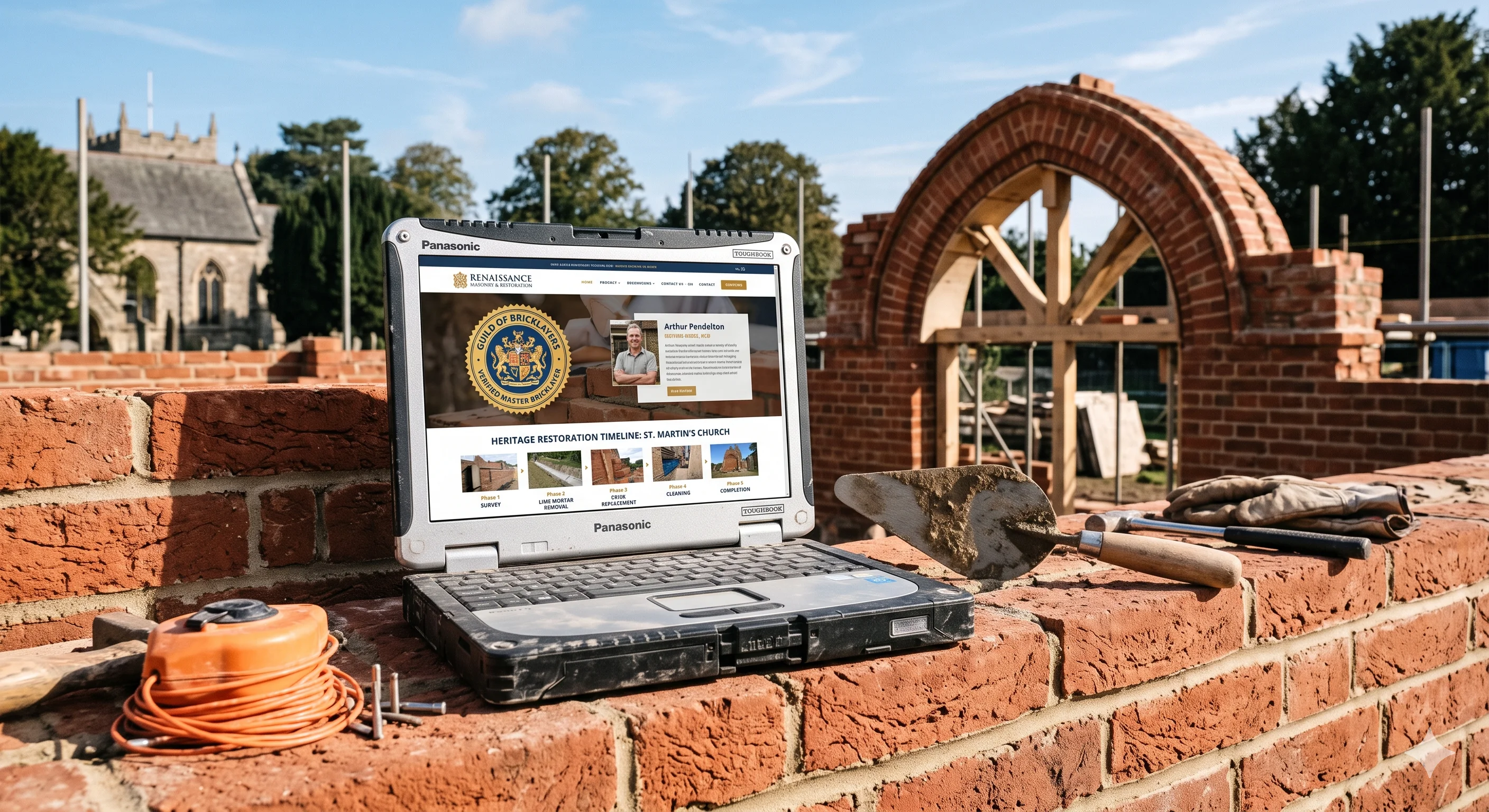
Sequential Visual Timelines: To prove first-hand experience, the platform must handle heavy visual payloads showing the progression of the build: footings, damp proof course (DPC) installation, blockwork, and the final pointing finish.
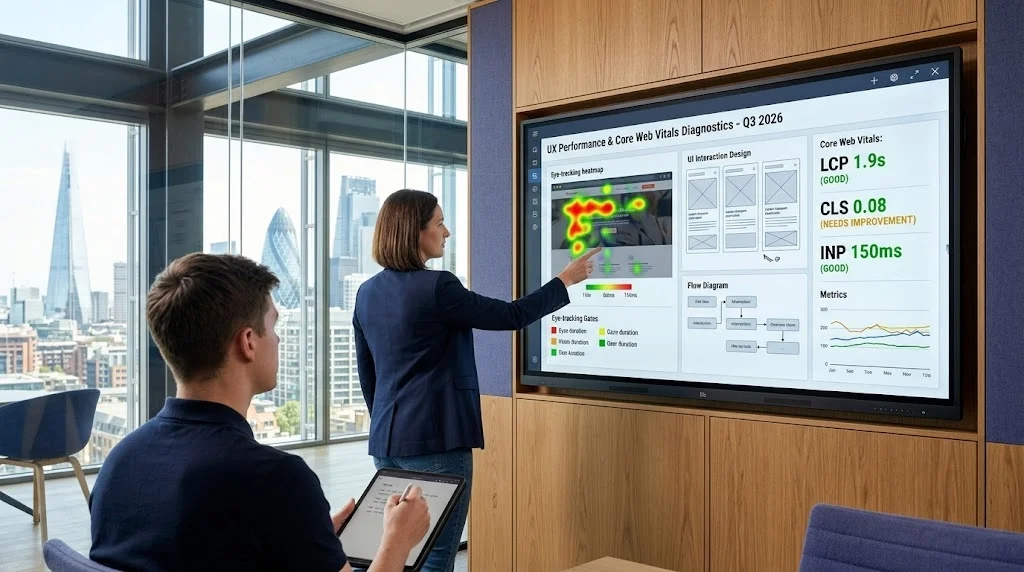
Headless Delivery: Because this requires loading massive amounts of high-resolution visual evidence, legacy systems like WordPress will buckle, failing the 2.0-second Largest Contentful Paint (LCP) standard. We decouple your frontend, routing these heavy image timelines through an edge-computed asset pipeline that converts them to next-generation AVIF formats. This ensures your proof of experience loads in milliseconds. You can explore the mechanics of this high-performance delivery within our development process.
Step 2: Structuring Deep Technical Expertise (The Second 'E')
Expertise is demonstrated by the depth, accuracy, and technical specificity of your content. A single page labeled "Bricklaying Services" demonstrates zero expertise. To capture high-value contracts, you must build isolated, technically rich service silos.
Material Specification Silos: We architect dedicated pages detailing your proficiency with specific materials. For example, a dedicated silo for "Lime Mortar Repointing" must technically explain the differences between NHL 3.5 and NHL 5, the breathability of historical brickwork, and the correct curing times. This signals deep, niche expertise to the algorithm.
Structural Content Clusters: If you handle structural alterations, we build content clusters around load-bearing calculations, temporary propping (acrow props and Strongboys), and RSJ beam installations.
FAQ Schema Injection: We anticipate the exact technical questions commercial estimators and homeowners ask. We provide the precise, expert answers directly on the page and wrap them in strict JSON-LD FAQ schema, making your platform highly eligible for Google's AI Overviews.
We map out these complex, multi-layered architectural structures for all our clients, ensuring your domain is recognized as the definitive technical authority. See how we implement this across our specialized web services.
Step 3: Verifying Authoritativeness in the Built Environment (The 'A')
Authoritativeness is about who you are within your industry. Are you a recognized entity? Does the broader web agree with your claims of expertise?
Person Entity Architecture: The master mason or business owner must be established as a digital entity. We engineer dedicated Author Bio pages that do not just list a name, but link out to verifiable professional profiles, Guild of Bricklayers memberships, or CSCS Black Card (Manager) statuses. We tie this all together using
Personschema markup.Digital Press and Citation Linking: When your business is mentioned in local press, trade magazines, or supplier networks (e.g., listed as an approved installer for specific facing bricks), we structurally integrate these external validation signals back into your site architecture to pass maximum domain authority.
Step 4: Forging Unbreakable Digital Trust (The 'T')
Trustworthiness is the most critical component of the EEAT framework. In the construction and masonry trades, a lack of trust is a total barrier to entry. Trust is evaluated by the algorithm through both structural security and transparent business practices.
Zero-Latency Interactions: If a procurement manager clicks to download your risk assessments and method statements (RAMS) and the site freezes, trust is immediately severed. We utilize advanced JavaScript yielding and code-splitting to ensure your Interaction to Next Paint (INP) score remains under 200 milliseconds.
Frictionless Verification: Your public liability insurance, building control compliance standards, and verified third-party reviews (from platforms like TrustMark or Checkatrade) must not be hidden. We hardcode dynamic trust badges into the sticky header of your application, ensuring they are instantly visible on every single page load.
Enterprise-Grade Security: We deploy strict SSL protocols and static-site generation. Because your site is pre-compiled and served via a global Content Delivery Network (CDN) with no direct connection to a vulnerable database, it is virtually impervious to standard SQL injection or brute-force attacks, maximizing algorithmic trust scores.
The Mandate for 2026
The era of ranking a masonry business with a thin, slow, and unverified digital brochure is permanently over. The search engines, and more importantly, your premium clients, demand demonstrable EEAT.
Your website must act as an automated, high-performance extension of your physical trade—structured flawlessly, built with premium assets, and engineered to last. If your current digital infrastructure is bleeding organic traffic and failing modern technical audits, reach out directly to our engineering team to begin your comprehensive architectural upgrade.