I have spent the last two decades writing code, optimizing server architectures, and reverse-engineering Google algorithms. When I look at websites for decorators and high-end painting contractors across the UK, I see the exact same critical error repeated over and over.
You are selling an aesthetic service. Your entire business model relies on visual perfection, precision, and trust. Yet, your digital portfolios are usually hosted on sluggish, legacy WordPress templates that compress your images into blurry, pixelated messes or take six seconds to load, causing the screen to jump around erratically.
In 2026, Google's algorithm has evolved. It does not just look at your keywords; it analyzes the mathematical stability and loading speed of your visual assets. If you want to secure high-ticket interior design and premium decorating contracts, you cannot rely on an amateur digital presence. Here is the definitive technical blueprint for engineering a high-converting web platform specifically for decorating professionals.
The Mathematics of Visual Stability
For a high-end decorator, your portfolio is your primary conversion asset. When you upload a massive gallery of high-resolution images showing a flawless Venetian plaster job, and those images load without predefined dimensions, the text on the page gets violently pushed down as the images render.
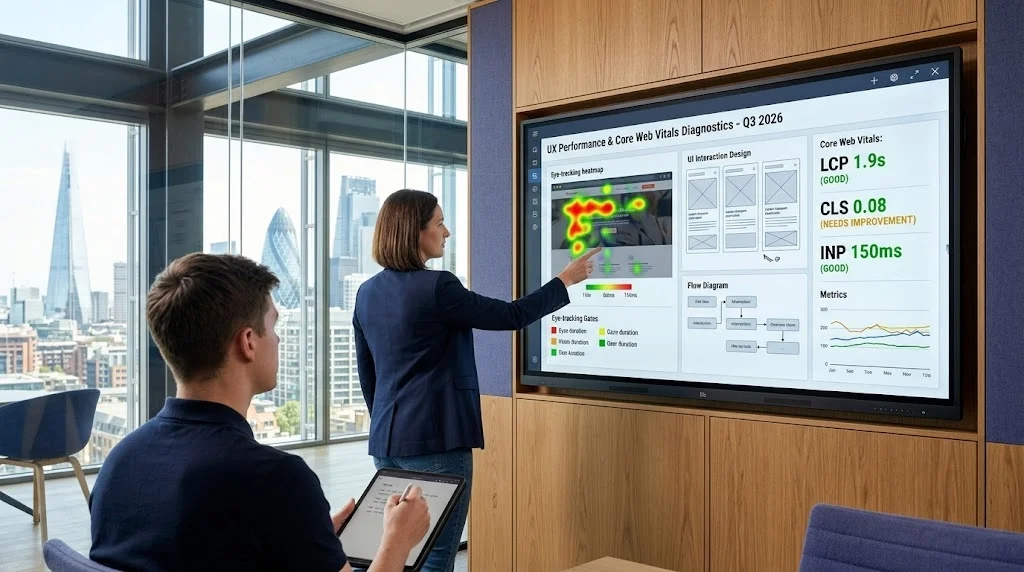
This layout shifting results in a failing Cumulative Layout Shift (CLS) score. In the 2026 search landscape, Google enforces a strict CLS threshold of under 0.1 for a passing grade. Layout shifts severely damage user experience, especially on mobile devices, and Google now penalizes this instability aggressively. Google interprets this erratic movement as a broken user journey.
We prevent this by hardcoding strict aspect ratios and pre-calculating the Document Object Model (DOM) geometry before the page even loads. The browser knows exactly how much space to reserve for every single image, preventing the costly and visually disruptive reflows that trigger high CLS scores. This ensures a rock-solid, zero-shift loading sequence.
Color Accuracy and Next-Gen Payloads
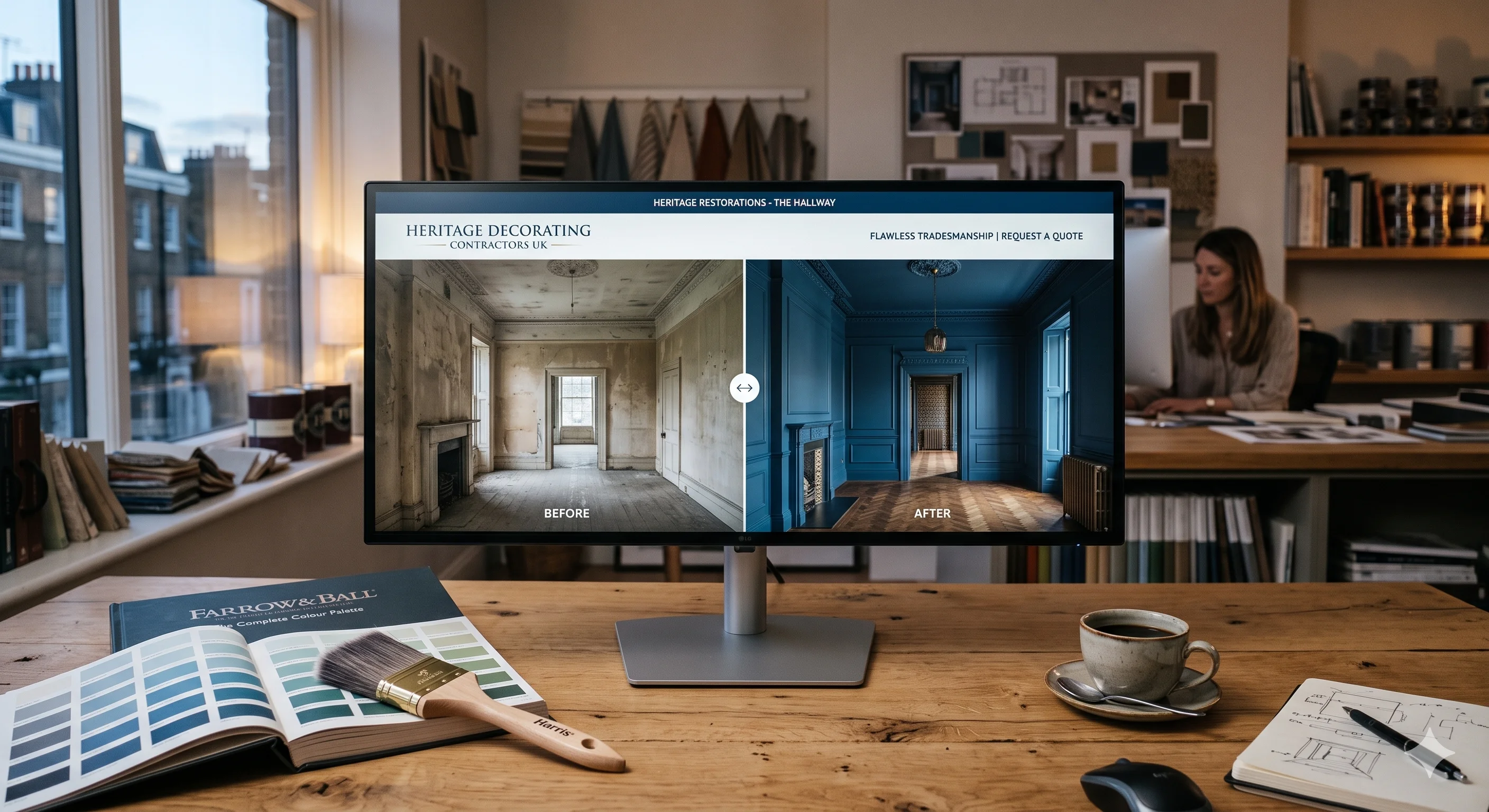
Selling premium decorating services often comes down to exact color matching. A client wants to see the true depth of a Farrow & Ball Hague Blue or the precise finish of a limewash wall. Standard JPEG compression destroys these subtle color profiles.
However, uploading uncompressed 10MB PNGs will trigger a massive Largest Contentful Paint (LCP) failure. The 2026 standard for LCP is a brutal 2.0 seconds, having been aggressively tightened from the previous 2.5-second threshold. If your hero image takes longer than 2.0 seconds to render, you lose rankings.
The solution requires an automated image pipeline. We utilize headless architecture to intercept your high-res uploads and automatically compile them into next-generation AVIF and WebP formats. These modern formats retain absolute color fidelity and high-definition sharpness while stripping the file size down by 70%. We then serve these lightweight assets directly from a global Edge network, bypassing traditional database lag completely. If you want to understand the mechanics of this asset delivery, review our technical execution at https://webwise.digital/#process.
Architecting the Portfolio Entity
A masonry grid of photos with no context is not an SEO strategy. Search engines cannot "see" how good your painting is. They read structured data. Your portfolio must be architected as a semantic entity.
When we build case study templates, we are not just creating a gallery; we are building an SEO asset. Every project must have a dedicated URL. We then inject precise JSON-LD schema into the code. We mark up the page with specific project and local business data, detailing the exact geographical location, the specialized materials used, and the scope of the contract.
This feeds the algorithm the exact contextual signals it needs. When a homeowner searches for "heritage property restoration painters London," your portfolio page surfaces because the underlying code perfectly matches the search intent. We implement this precise entity mapping across all our builds, which you can explore through our specialized services at https://webwise.digital/services.
The Interaction to Next Paint (INP) Factor
Decorating websites often rely heavily on interactive elements: before-and-after sliders, dynamic color swatches, or heavy video backgrounds. In the past, the heavy JavaScript required to run these features would freeze the browser's main thread.
In 2026, Google uses Interaction to Next Paint (INP) as a primary ranking signal. INP measures the responsiveness of your site after a user interaction. It demands a response time of under 200 milliseconds. If a user taps your "Request a Quote" button or slides a before-and-after widget and the screen lags, you are actively penalized.
We solve this through aggressive code-splitting. Instead of loading one massive JavaScript file, we break the code into asynchronous micro-chunks. The browser only loads the exact code it needs for the specific interaction happening at that millisecond. This keeps the main thread clear and ensures your platform feels instantly responsive. To see this high-performance engineering in action, check out our recent project deployments at https://webwise.digital/work.
Establishing the Digital Standard
Your digital platform is the first impression a high-net-worth client will have of your business. If it is slow, visually unstable, or structurally compromised, they will immediately associate those traits with your physical workmanship.
At https://webwise.digital, we do not build basic brochures. We engineer bespoke, headless web applications designed to capture search visibility, render visual perfection instantly, and convert premium traffic into signed contracts. If you are ready to stop losing high-end tenders to competitors with superior digital infrastructure, reach out to our team at https://webwise.digital/contact to initiate your stack audit.